An HCPCS code is the Level II billing code that Medicare and most commercial payers use to identify a specific item of durable medical equipment on a claim. For orthotic braces, every one of those codes begins with the letter L, which is why coders call them L-codes. If your practice has started dispensing braces in the office, the HCPCS code is the field that tells the payer exactly what you supplied.
Here is the part that catches most practices out. The same physical brace very often carries two different HCPCS codes. One is the off-the-shelf code, one is the custom-fitted code, and nothing about the item in the box changes between them. What changes is the fitting work performed at the time of delivery and who was qualified to perform it. Choose the wrong one and you have misdescribed the service, not merely the product.
That single distinction drives a large share of orthotic billing errors. Below are seven rules for reading an HCPCS code correctly, written for the practice manager or biller who has just inherited a bracing line and needs to get the coding right the first time.
What is an HCPCS code, and why do braces use L-codes?
HCPCS stands for the Healthcare Common Procedure Coding System, maintained by the Centers for Medicare & Medicaid Services. Level I of that system is CPT, which describes professional services. Level II covers products, supplies and equipment that CPT does not, and that is where braces live. The L series within Level II is reserved for orthotic and prosthetic devices, running from spinal orthoses in the L0 range through lower limb, upper limb and, at the far end, the L4 range that includes walking boots.
For the lumbar-sacral and thoracolumbar back brace L-codes in detail, from the sagittal-control panel codes to the rigid-shell LSO codes, see our guide to spinal orthosis HCPCS codes.
For neck collars, from the soft foam L0120 collar to the rigid multiple-post L0180 orthoses, see our guide to cervical orthosis HCPCS codes.
An HCPCS code is a product identifier and a description of how that product was supplied. It is not a price, and it is not a promise of payment. Practices new to bracing sometimes read a code on a supplier catalog page as confirmation that the item is covered. It is not, and CMS says so directly. That point is important enough that we cover it separately in our guide to DME dispensing in the physician office, which deals with enrollment, coverage and documentation. This article stays on the coding layer.
Rule 1: Read the HCPCS code as a description, not a permission slip
Every L-code has a long descriptor written by CMS. That descriptor is the definition of what you are claiming to have supplied. If the brace you handed the patient does not match the descriptor in every material respect, the HCPCS code is wrong, however close the product looks.
Read the whole descriptor, including the closing clause. On most orthotic codes the final few words are the operative ones, because they are the only place the descriptor distinguishes between an item that was fitted by a qualified practitioner and an identical item that was handed over ready to wear.
Rule 2: Expect the same brace to have two HCPCS codes
This is the rule that surprises people, so it is worth being concrete. Across the bracing catalog HealthWright Technologies currently publishes, 41 products list two HCPCS codes rather than one. In each case the pair is a confirmed off-the-shelf and custom-fitted pair for the same device: the catalog is not offering a choice of product, it is acknowledging that the correct HCPCS code depends on something the catalog cannot know.
Some familiar pairs, with the custom-fitted code first and the off-the-shelf code second:
| Device type | Custom-fitted | Off-the-shelf |
|---|---|---|
| Pneumatic walking boot | L4360 | L4361 |
| Non-pneumatic walking boot | L4386 | L4387 |
| Knee orthosis, adjustable knee joints | L1832 | L1833 |
| LSO, sagittal-coronal control | L0637 | L0650 |
| Wrist hand orthosis | L3915 | L3916 |
| Hand finger orthosis, thumb spica | L3923 | L3924 |
| Elbow orthosis | L3760 | L3761 |
If your biller has been picking whichever code appeared first on the packing slip, this is the place to stop and review. For the wrist and hand codes in detail, see our guide to wrist orthosis HCPCS codes. The two codes describe genuinely different levels of service, and payers price and audit them differently.
Rule 3: Let the fitting choose the HCPCS code, not the catalog
The determining question is what had to happen at delivery. Noridian, the Medicare DME contractor for Jurisdiction D, states the test plainly in its correct-coding article on off-the-shelf versus custom-fitted orthotics: “Classification depends on (1) what must be done at final fitting and (2) who must do it. Expertise of a qualified practitioner and more than minimal self-adjustment at the time of delivery qualify the items for classification as custom fitted. Failure to meet either criterion 1 or 2, the item would be classified as off-the-shelf.”
The regulation behind that sits at 42 CFR 414.402, which defines off-the-shelf orthotics as items that “require minimal self-adjustment for appropriate use and do not require expertise in trimming, bending, molding, assembling or customizing to fit a beneficiary.” The same section defines minimal self-adjustment as “an adjustment that the beneficiary, caretaker for the beneficiary, or supplier of the device can perform and does not require the services of a certified orthotist … or an individual who has specialized training.”
Read that carefully and the practical consequence is clear. Two patients can leave your office on the same day wearing the identical brace from the identical box, and the correct HCPCS code can differ between them, because one needed the uprights bent and the shell heat-adjusted by someone with specialized training and the other simply pulled the straps snug.

Rule 4: Know the third category, custom fabricated
Off-the-shelf and custom-fitted are both prefabricated. There is a third tier above them. Noridian describes a custom fabricated orthosis as one “individually made for a specific beneficiary (no other beneficiary would be able to use this orthosis) starting with basic materials including, but not limited to, plastic, metal, leather, or cloth in the form of sheets, bars, etc.” It involves substantial work such as vacuum forming, cutting, bending, molding and sewing, and it requires “more than trimming, bending, or making other modifications to a prefabricated item.”
A practice stocking a standard bracing catalog is almost never in custom fabricated territory. Knowing the boundary still matters, because it is the reason the custom-fitted codes exist at all. Custom-fitted is the middle tier: a factory-made device that nonetheless needed a trained pair of hands to make it fit this particular patient.
Rule 5: Put the right modifiers on the orthosis claim
Choosing the HCPCS code is half the job. Orthosis claims also carry modifiers, and on many DME policies a missing modifier gets the line rejected before anyone assesses medical necessity. The ones that matter most:
- RT and LT. Required on orthosis base codes, additions and replacement parts. A bilateral supply goes on two separate claim lines, one RT and one LT, never combined on a single line.
- KX. Signals that the coverage criteria in the relevant local coverage determination have been met and the supporting documentation is on file.
- GA. Signals that a waiver of liability, meaning a signed Advance Beneficiary Notice, is on file. Our guide to the Advance Beneficiary Notice and when to issue one covers the mechanics.
- GY. Signals an item that is statutorily excluded or does not meet the definition of any Medicare benefit.
- GZ. Signals an item expected to be denied as not reasonable and necessary where no ABN was obtained. The supplier, not the patient, absorbs that one.
CMS is explicit on the consequence for knee orthoses: claim lines billed without a KX, GA or GZ modifier are rejected as missing information. Getting the HCPCS code right and then omitting the modifier produces the same outcome as getting the code wrong. For the knee codes in detail, from the L1830 immobilizer to the single and double-upright OA knee L-codes, see our guide to knee orthosis HCPCS codes.
Rule 6: Document the fitting while the patient is still in the room
If the HCPCS code is determined by the fitting, then the note describing the fitting is the evidence for the code. A custom-fitted claim that reads “brace dispensed” in the chart has no support. What an auditor is looking for is a record of what was actually modified, by whom, and why the modification required specialized training.
Practically, that means capturing the adjustments performed at delivery, the credentials of the person who performed them, and the clinical reason the standard fit was insufficient. This is a small habit that takes a minute at the point of care and is close to impossible to reconstruct six months later.
Rule 7: Re-check your catalog codes against the current HCPCS file
HCPCS Level II is updated on a rolling basis, and orthotic policy articles are revised regularly. The CMS knee orthoses policy article and the spinal orthoses policy article both carry revision dates, and a code that was correct when a supplier built its catalog page may have been superseded since.
Treat any HCPCS code printed on a product page, including ours, as a supplier reference rather than a coding determination. Verify it against the current HCPCS file and the applicable local coverage determination before it goes on a claim. Of the products HealthWright Technologies currently publishes, 87 carry an HCPCS reference, and every one of those 87 pairs it with an explicit statement that the reference does not imply Medicare endorsement and does not guarantee coverage. That disclaimer is there for a reason.
How often does orthotic billing actually go wrong?
Often enough that it is worth the attention. In the CMS report 2025 Medicare Fee-for-Service Supplemental Improper Payment Data, covering claims submitted from July 1, 2023 through June 30, 2024, Medicare fee-for-service overall recorded a 6.55 percent improper payment rate. DMEPOS as a whole came in at 24.1 percent, roughly four times the program-wide figure.
Orthoses specifically run higher still. In the same report, lower limb orthoses recorded a 47.2 percent improper payment rate, upper limb orthoses 48.1 percent, and lumbar-sacral orthoses 52.3 percent. That rate is calculated on dollars rather than on claim counts: more than half of every Medicare dollar paid for lumbar-sacral orthoses in that sample went out on an improper payment.
Those numbers are not an argument against dispensing braces. They are an argument for treating the HCPCS code as a clinical documentation question rather than an inventory question. A practice that fits carefully, codes to the fitting and writes the note is not the practice generating that rate.

How should a practice choose the right HCPCS code?
A short sequence covers most situations. Start from the descriptor rather than the product name. Confirm whether the item is prefabricated or fabricated from raw materials for this patient alone. If prefabricated, ask what had to be done at final fitting and whether it needed specialized training. Select the matching member of the code pair. Add RT or LT, then the coverage modifier the policy requires. Write the fitting note before the patient leaves.
Practices building out an in-office bracing line will find the wider commercial picture in our overview of ancillary revenue streams for medical practices, and the current catalog on our DME bracing page for physician practices.
Frequently asked questions about HCPCS codes for braces
Why does one brace have two HCPCS codes?
Because the codes describe the fitting, not just the product. Most prefabricated orthoses have a custom-fitted code and an off-the-shelf code. The custom-fitted code applies when the item required more than minimal self-adjustment at delivery and the expertise of a certified orthotist or an individual with specialized training. Otherwise the off-the-shelf code applies.
Is an HCPCS code the same as a CPT code?
No. CPT is Level I of HCPCS and describes professional services. The L-codes used for braces are Level II, which covers products and supplies. Searches for an “L4361 CPT code” are really looking for the HCPCS Level II descriptor, since there is no CPT code for a walking boot. For the four walking boot L-codes and how to choose between them, see our guide to walking boot HCPCS codes.
Does an HCPCS code on a product page mean Medicare will pay?
No. CMS states that HCPCS coding is not a system for making coverage or payment determinations and that the existence of a code does not, in itself, determine coverage. A catalog HCPCS reference is a product identifier. Coverage and payment are decided by the payer under its own policy.
What is the difference between custom-fitted and custom-fabricated?
Custom-fitted starts with a prefabricated device that is then trimmed, bent, molded or otherwise adjusted by a qualified practitioner to fit a specific patient. Custom-fabricated starts with raw materials such as sheets of plastic or metal and builds an orthosis that no other patient could use.
Which modifier goes on an orthosis claim?
RT or LT on every base code, addition and replacement part, on separate lines for bilateral supplies. Then the applicable coverage modifier: KX when policy criteria are met and documented, GA when a signed Advance Beneficiary Notice is on file, GY for statutorily excluded items, and GZ when a denial is expected and no ABN was obtained.
Talk to us about in-office bracing
HealthWright Technologies supplies bracing and diagnostic equipment to physician practices across the United States. If you are evaluating an in-office bracing line and want to talk through catalog fit, fitting workflow or provider account setup, you can apply for a provider account or contact our team. We are at 60 Bear Creek Marina Rd, Mansfield, GA 30055, and you can reach us at contact@healthwrighttechnologies.com.
This article is general information for healthcare practices and is not billing, coding, legal or medical advice. Coding and coverage determinations depend on the individual patient, the payer and the applicable policy in effect at the time of service. Verify every code against the current HCPCS file and the applicable local coverage determination, and consult a qualified healthcare professional for diagnosis, treatment and clinical decision-making. HCPCS is maintained by the Centers for Medicare & Medicaid Services. CPT is a registered trademark of the American Medical Association.
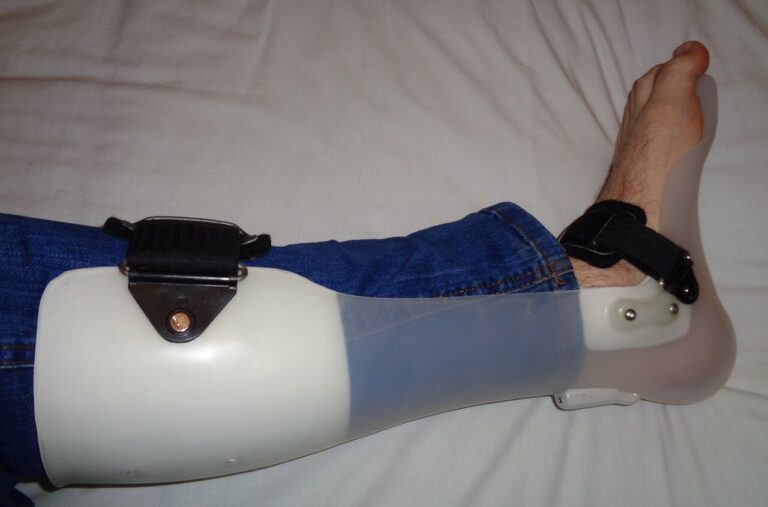
Featured image: “Upperlimb Orthosis Wrist Hand Orthosis” by SarahAnderson, via Wikimedia Commons, licensed CC BY-SA 3.0.
Ready to see the CMAT Advantage in your practice?
Book a free 25-minute demo: see the full PAD + autonomic workup and how the three established CPT codes apply, with no obligation. Backed by our 60-day buyback guarantee.
Book a Free Demo →