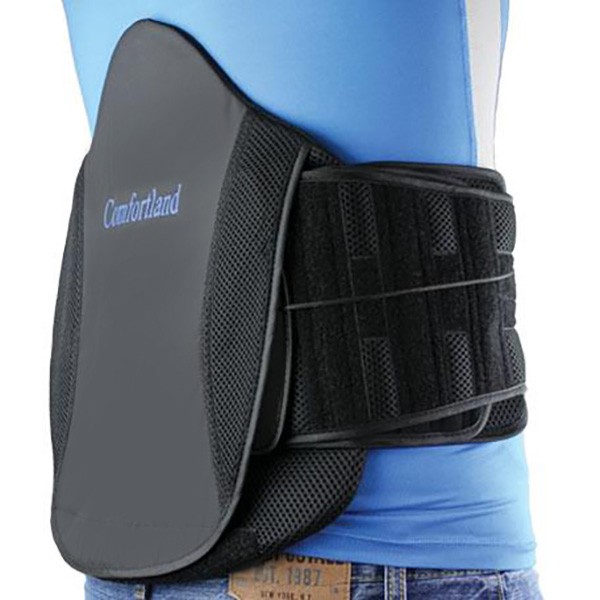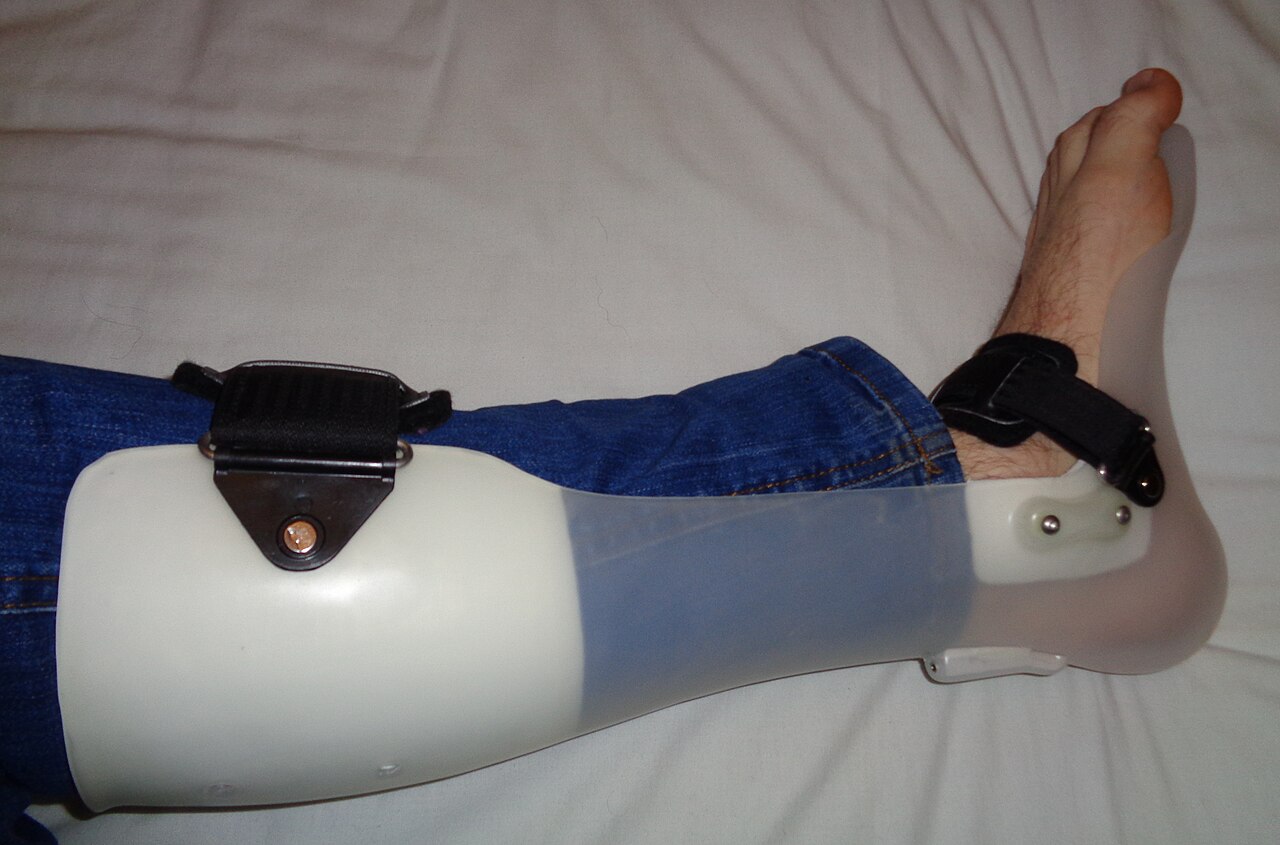
The ankle-foot orthosis HCPCS codes a practice reports fall into three groups, and the group decides the code before the specific brace does. Custom-fabricated AFOs, made for one patient from a mold or a scan, sit in the L1900 to L1990 range, with L1960 for a solid-ankle plastic AFO and L1970 for a plastic AFO that has an ankle joint.
Prefabricated AFOs, built in advance and then fitted, split into two more groups. A prefabricated AFO that a qualified person trims, bends, or molds to the patient is custom-fit; one the patient can apply with little or no adjustment is off-the-shelf. That one distinction is where most clean claims are won or lost, because the same physical brace can carry a different code depending only on how it is fitted.
The sections below walk through the codes you are most likely to use for an in-office AFO, from the molded plastic devices to the soft ankle gauntlets, the stirrup braces coded L4350, and the foot-drop splints. Code selection always follows the device you supplied and the patient record, never the other way around.
What ankle-foot orthosis HCPCS codes describe
HCPCS Level II codes are the billing codes that Medicare and most commercial payers use to name a specific item of durable medical equipment on a claim, and the Centers for Medicare and Medicaid Services (CMS) maintains the list. For bracing, every code begins with the letter L, which is why coders call them L-codes. An ankle-foot orthosis can be built three ways, and the build sets the first fork in the road.
- Custom-fabricated means the device is made for one named patient over a positive model of that patient’s leg. These carry the L1900 range.
- Prefabricated, custom-fit means a stock device that a qualified person then trims, bends, molds, or otherwise substantially modifies to fit the patient.
- Prefabricated, off-the-shelf means a stock device the patient can apply with minimal self-adjustment and no specialized skill.
CMS splits many prefabricated devices into a paired custom-fit and off-the-shelf code that share the same descriptor text. The pair separates only on the work done at the point of fitting, so the record has to show that work when you report the custom-fit code. Picking the right side of that pair is the single most common AFO coding decision, and it is the one a payer audit looks at first.
Custom-fabricated AFOs: the L1900 range
When a device is molded to an individual patient, you are in the custom-fabricated range. The codes you will see most often are:
- L1900, AFO, spring wire, dorsiflexion assist with a calf band, custom fabricated.
- L1940, AFO, plastic or other material, custom fabricated.
- L1960, AFO, posterior solid ankle, plastic, custom fabricated. This is the rigid, non-articulating design that blocks ankle motion for maximum stability.
- L1970, AFO, plastic with an ankle joint, custom fabricated. The ankle joint is what separates it from L1960, because it allows controlled motion rather than locking the ankle.
Custom-fabricated AFOs carry their own documentation weight, because a payer expects the record to show why an off-the-shelf or custom-fit device would not have met the patient’s need. The model, the measurements, and the clinical reason for a molded device belong in the chart before the claim goes out.
Prefabricated AFOs: custom-fit versus off-the-shelf
Most in-office AFOs are prefabricated, and this is where the custom-fit and off-the-shelf fork does the real work. Two soft prefabricated AFOs you will reach for often are both off-the-shelf:
- L1902, ankle orthosis, ankle gauntlet or similar, with or without joints, prefabricated, off-the-shelf.
- L1906, AFO, multiligamentous ankle support, prefabricated, off-the-shelf.

Rigid prefabricated AFOs have their own codes. L1932 is an AFO with a rigid anterior tibial section made of carbon fiber or an equal material, prefabricated, and L1951 is a spiral plastic AFO of the institute-of-rehabilitative-medicine type, prefabricated. Where a prefabricated device comes in a paired custom-fit and off-the-shelf code, the rule is the same every time. If a qualified person modified the device to fit the patient, the custom-fit code applies and the record documents the modification. If the patient applied it with minimal adjustment, the off-the-shelf code applies. Reporting the custom-fit code on a device the patient simply put on is the error that drives these claims into review.
One pair changed in the October 2026 HCPCS update. L1971, a prefabricated AFO of plastic or other material with an ankle joint, now reads as a custom-fit item: one trimmed, bent, molded, assembled or otherwise customized to fit the patient by an individual with expertise. Before the update it read “includes fitting and adjustment.” CMS added L1972, effective October 1, 2026, with the same device wording but off-the-shelf, so a jointed prefabricated AFO the patient applies with minimal adjustment now has its own code, and the fitting note decides between the two.
Ankle control and stirrup braces: L4350
A common search leads practices to the stirrup-style ankle brace, and it has a dedicated code. L4350 is an ankle control orthosis, stirrup style, rigid, including any type of interface such as pneumatic or gel, prefabricated, off-the-shelf. These are the rigid air-and-gel ankle braces used after a sprain or for lateral ankle instability. Because L4350 is defined as off-the-shelf, it does not carry a custom-fit sibling, so a device that genuinely needs qualified fitting is coded as the AFO it is, not forced into L4350.

Coding a foot-drop AFO: L4396, L4397, and L4398
Foot-drop devices are where the custom-fit and off-the-shelf distinction shows up most cleanly, because two of the codes share an identical descriptor and separate only on fitting:
- L4396, static or dynamic AFO, including soft interface material, adjustable for fit, for positioning, and may be used for minimal ambulation, custom-fit.
- L4397, the same descriptor as L4396, but off-the-shelf. The device is identical in kind; the only difference the code records is whether a qualified person fitted it or the patient applied it with minimal adjustment.
- L4398, foot drop splint, recumbent positioning device, prefabricated, off-the-shelf. This is the resting night splint, not an ambulatory brace, so it is coded apart from L4396 and L4397.

The L4396 and L4397 pair is the clearest illustration of the whole AFO coding system. Two codes, one physical device, and the fitting method is the only fact that moves you from one to the other. That is why the chart note describing what was done at fitting is not paperwork around the claim; it is the evidence that supports the code.
AFO versus KAFO: where the L-code range changes
One miscode worth flagging is the jump from an ankle-foot orthosis to a knee-ankle-foot orthosis, or KAFO. An AFO stops at the lower leg and controls the ankle and foot, so it stays in the L1900 range and the L4350 to L4398 codes covered above. Once a brace crosses the knee to control the knee joint as well, it is a KAFO and moves into the L2000 to L2038 range, which carries its own custom-fabricated and prefabricated codes.
Reporting a KAFO under an AFO code, or the reverse, understates or overstates what the device does. Confirm how far up the leg the brace extends before you reach for a code, because the body region it controls, not its appearance, sets the range.
Modifiers an AFO claim usually needs
Beyond the L-code itself, an AFO claim almost always carries a laterality modifier, RT for the right leg or LT for the left, and a bilateral pair is reported on two lines with RT and LT rather than one line billed in a quantity of two. When the durable medical equipment policy requires an attestation that its coverage criteria are met, the KX modifier signals that the record supports them. The GA and GZ liability modifiers come into play when the service may be denied and the question is whether an Advance Beneficiary Notice is on file. Our guides to the Medicare liability modifiers and to the Advance Beneficiary Notice explain when each one belongs on the claim.
Documentation that supports the AFO code you choose
A code is only as clean as the record behind it. Durable medical equipment MAC policy for lower-limb orthoses expects the chart to show the order, the medical need, and, for a custom-fit device, the fitting work that the custom-fit code represents, which is the detail that separates it from its off-the-shelf pair.
The Pricing, Data Analysis and Coding (PDAC) contractor publishes a product classification list that ties a specific manufactured device to its correct code, and verifying a product against that list before you bill removes most of the guesswork on which L-code a given brace carries. When two codes share a descriptor, the record decides between them, so note the fitting at the point of service rather than reconstructing it later.
A practice that is standing up an in-office bracing program for the first time often finds that payer enrollment and supplier accreditation, not the coding, are the longer pole. If that is where you are, our colleagues at Practice Management Consultancy cover the groundwork in their guide to insurance credentialing for practices, which is worth reading before the first claim goes out.
Getting AFO coding right in your practice
The short version is that an AFO code answers two questions in order: was the device custom fabricated for this patient, and if it was prefabricated, did a qualified person fit it or did the patient apply it off the shelf. Answer those two, match the device to the PDAC-verified code, and document the fitting, and the common AFO claim is straightforward. For braces on other body regions, our companion guides cover knee orthosis HCPCS codes and wrist orthosis HCPCS codes, the walking boot codes L4360 through L4387, and the broader framework in our HCPCS code guide for orthotic braces. Podiatry practices fitting AFOs will also find our guide to in-office bracing for podiatry practices useful.
HealthWright Technologies carries the ankle and foot bracing line used for in-office dispensing, and our own catalogue shows how often the code question comes up. Of the 13 products in that category today (10 braces and splints plus three heel cups), five carry an L1906 supplier reference, and three of those five list a second code, L1971, beside it. Those two codes describe different kinds of device, so check the brace against the PDAC list before you report either one, and remember that since October 2026 L1971 is the custom-fit code, with a new off-the-shelf twin, L1972. Every product page shows the supplier’s reference, so you see it before you dispense. You can browse the in-office DME bracing catalogue, request a provider account to set up ordering, or reach us through our contact page, and you can also call (678) 322-7146 and we will follow up.
General coding education, not advice on a specific claim: HCPCS Level II codes are maintained by CMS, coverage follows each payer’s policy, and patients should consult their healthcare provider before starting any new treatment.
Ready to see the CMAT Advantage in your practice?
Book a free 25-minute demo: see the full PAD + autonomic workup and how the three established CPT codes apply, with no obligation. Backed by our 60-day buyback guarantee.
Book a Free Demo →