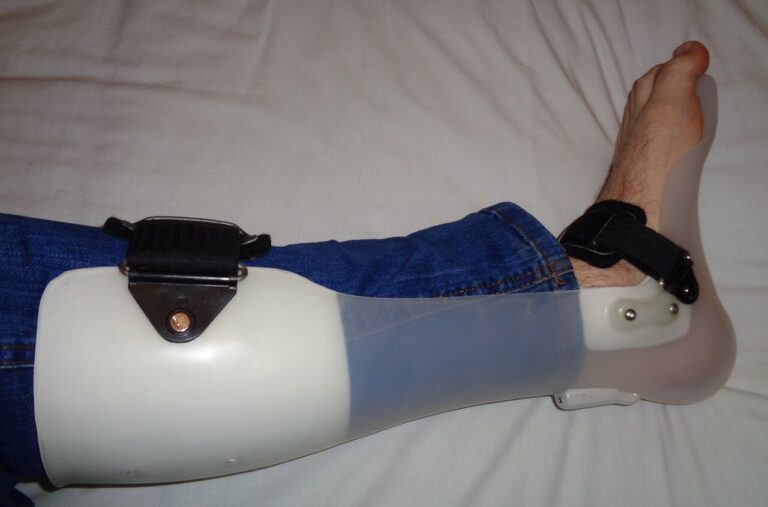
In-office bracing for podiatry practices means keeping a working selection of prefabricated foot, ankle and lower-limb orthoses on the shelf so the patient leaves the visit already wearing the device, instead of leaving with a referral to a supplier across town. For a podiatry practice the case is unusually strong, because so much of what walks through the door is a foot or ankle problem that a brace is part of the answer to. The catch is that bracing is a supply line with billing rules attached, and it fails in ways a clinical practice is not set up to notice.
This guide covers seven practical rules for running in-office bracing for podiatry practices: what to stock, how to read the code on the product page, who is allowed to fit the device, and what has to be in the note before the patient stands up. It assumes you are a podiatrist, practice manager or biller who has decided bracing is worth doing and now wants it done correctly the first time.
One number frames the whole exercise. In its fiscal year 2025 improper payment fact sheet, published January 15, 2026, the Centers for Medicare & Medicaid Services put the Medicare fee-for-service improper payment rate at 6.55 percent, or $28.83 billion. Supply lines are where a lot of that goes wrong, and the cause is almost always paperwork rather than the product.
What is in-office bracing for podiatry practices?
It is the practice of stocking prefabricated orthoses and supports, fitting them at the point of care, and handling the associated documentation and billing yourself. The device is not manufactured in your office. It arrives finished, from a supplier, in a box, in a range of sizes. What your practice adds is the clinical decision, the fitting, the patient education and the record of all three.
That distinction matters more than it sounds. A prefabricated brace that you hand over unmodified is one thing. The same brace, trimmed, bent, molded or otherwise adjusted by someone qualified to do it, is a different thing with a different code and a different documentation burden. Everything else in this article follows from that single fork in the road. If you want the coding side in depth, we wrote a separate guide on how to read an HCPCS code for an orthotic brace, and the program-level questions about enrolment, the physician exception and inventory risk are covered in our rules for DME dispensing in a physician office.
HealthWright Technologies supplies the products. It does not fit them, dispense them, bill for them or treat patients. Those are your practice’s responsibilities, and every rule below is written on that assumption.
Rule 1: Size the formulary to the foot and ankle, not the whole catalogue
The most common first mistake in in-office bracing for podiatry practices is buying breadth. A supplier catalogue runs to hundreds of items across every joint in the body, and it is tempting to stock a little of everything so you are never caught short. In a podiatry practice that is the wrong shape. Your presenting complaints cluster hard, and so should your shelf.
Measured directly from our own catalogue on September 7, 2026, the bracing line holds 90 published products spread across eleven category archives. The distribution is worth seeing, because it shows how little of a general bracing catalogue a foot and ankle practice actually needs:
- Back and LSO supports: 20 products
- Knee braces: 16 products
- Ankle and foot braces: 13 products
- Wrist and hand: 8 products
- Shoulder: 7 products
- Cervical collars: 6 products, hip: 6 products
- Walking boots: 4 products, TENS and compression: 4 products
- Elbow: 3 products, accessories: 3 products
Seventeen of the ninety items sit squarely in the foot and ankle lane, and a handful of the knee and compression products are relevant to post-operative and offloading work. That is the honest starting size of a podiatry formulary. Start there, look at the ankle and foot braces and the walking boots first, and let the rest of the catalogue stay a drop-ship line you order against a specific patient.

Rule 2: Treat the HCPCS code as a reference, never as a coverage promise
Every product page in a bracing catalogue that is worth using shows the supplier’s HCPCS Level II reference, the L-code that identifies the item on a claim. On our own catalogue, 87 of the 90 bracing products carry that reference, and all 87 carry it alongside an explicit statement that the reference does not imply Medicare endorsement and does not guarantee coverage or payment. Eighty-two of them carry a literal L-code string. The three with no code reference at all are two belt extensions and a digital TENS and EMS unit, which is exactly what you would expect: accessories and add-ons often have no code of their own.
Read that disclaimer as the operative sentence, not as boilerplate. A code on a product page is a product identifier written by the manufacturer. Coverage and payment are decided by the payer under its own policy, on the strength of your documentation, after the fact. A practice that starts a bracing line believing the catalogue has answered the coverage question has built the whole thing on a misunderstanding.
Rule 3: Decide who fits the brace before you decide what to stock
In in-office bracing for podiatry practices, the person performing the fitting determines which code applies and, in a good many cases, whether the claim survives review at all. An off-the-shelf item requires minimal self-adjustment by the patient. A custom-fitted item requires substantial modification by an individual with expertise in the device, performed at the time of delivery. Same box, different work, different code.
So settle the staffing question first. Who in your office is qualified to do substantial modification, what is the evidence of that qualification, and is that person reliably present on the days you plan to fit? If the honest answer is that nobody is, then stock accordingly and stay in the off-the-shelf lane. There is nothing wrong with an off-the-shelf programme. There is a great deal wrong with an off-the-shelf programme coded as a custom-fitted one.
Rule 4: Write the fitting note while the patient still has the brace on
Documentation written from memory at the end of the day is the single largest source of avoidable trouble in in-office bracing for podiatry practices. The note that survives review is written in the room. It records the diagnosis that made the device necessary, the specific item supplied including size and side, who performed the fitting, what adjustments were actually made, and what the patient was told about wear and care.
- The diagnosis, and why this device rather than another
- The exact item supplied, including manufacturer, size and side
- Who performed the fitting, and the basis for their qualification to do it
- What adjustment was actually performed, described rather than ticked
- What the patient was told about wear time, skin checks and when to call
Practices that run in-office bracing for podiatry practices well tend to treat that list as a hard stop in the encounter template, not a reminder. The reason is simple. A fitting takes a few minutes, the note takes a few more, and the gap between them is where a year of claims quietly goes wrong.
None of that is exotic. All of it is easy to lose. Build it into the encounter template rather than leaving it to discipline, because discipline is the thing that fails first on a busy afternoon.

Rule 5: Keep the walking boot decision separate from the night splint decision
These two categories dominate podiatry bracing volume and they behave nothing alike. A walking boot is an acute immobilisation decision, usually short-term, usually driven by an injury or a post-operative course, and the patient wears it constantly. A night splint is a long-run positioning decision, worn during sleep, and its whole value depends on whether the patient keeps using it after week two.
Stock them on different logic. Boots turn over quickly and need sizes on the shelf, because sending an acute patient home to wait for a delivery defeats the point. Night splints tolerate a slower cycle and reward spending your time on the education conversation rather than on inventory.
Rule 6: Give the no-code accessories their own rules
Belt extensions, replacement straps, liners, heel cups and similar items are a real part of a bracing line and a small trap inside it. As the catalogue count above shows, some of them carry no HCPCS reference at all. That is not an error in the catalogue. It reflects that not every physical object has a billing code attached to it.
Handle them as a supply cost with a clear internal policy: what you give away, what you charge for, and what you simply do not stock. A practice that never decides this ends up absorbing the cost quietly and wondering why the bracing line reads thinner than expected.
Rule 7: Rebuild the list from your own top diagnoses every quarter
A formulary assembled once from a catalogue drifts. A formulary rebuilt each quarter from your own top twenty diagnoses stays useful. Pull the list, ask which of those conditions a brace is genuinely part of the plan for, and check what you stocked against what you actually fitted. The gap between the two is the report.
This is also where diabetes-related work earns its own line. StatPearls, in its chapter Diabetic Foot Ulceration and Complications by Srinivas-Shankar, Kimyaghalam and Bergman, last updated March 22, 2026, puts the lifetime risk of a diabetic foot ulcer at 19 percent to 34 percent, with recurrence reaching 42 percent at one year and 65 percent at five years. A podiatry practice with a large diabetic panel is looking at a recurring, long-horizon offloading and protection need rather than a one-off fitting, and its shelf should reflect that. Vascular status belongs in the same conversation, which is why we also write about PAD testing for podiatry practices.
What does a starter podiatry formulary look like in practice?
There is no universal list for in-office bracing for podiatry practices, because the right one is a function of your case mix. What follows is the shape most foot and ankle practices converge on, offered as a starting point to argue with rather than a prescription to copy.
- Immobilisation boots in a small range of sizes, high top and low top, because acute patients cannot wait
- Ankle stabilisers and gel stirrup braces for sprain and instability work
- An ankle gauntlet or AFO option for the patients who need more control than a stabiliser gives
- Night splints, ordered against demand rather than stocked deep
- Heel cups, arch supports and the small accessories that turn a fitting into a complete visit
- A compression option, kept deliberately separate from the orthosis list

Notice what is not on that list. There is no attempt to cover the knee, the back or the upper limb, even though those categories are the largest in the catalogue by product count. A podiatry practice that stocks to catalogue shape rather than to case mix ends up with capital sitting in boxes it will fit twice a year, and short on the boot size it needs this afternoon.
Everything outside that list can reasonably be a drop-ship item ordered per patient from the wider bracing catalogue, which keeps inventory risk down to what the practice actually chooses to carry.
How does in-office bracing for podiatry practices usually go wrong?
Rarely through a bad clinical decision. Almost always through one of four administrative ones: coding an off-the-shelf fitting as custom-fitted, writing the note after the patient has left, assuming the catalogue code answered the coverage question, and stocking to catalogue breadth instead of to case mix. Each of those is cheap to prevent on day one and expensive to unwind in month nine.
There is a fifth failure that is harder to see, because nothing about it looks like an error at the time. A practice starts the line, fits steadily for a few months, and never once reconciles what it bought against what it actually delivered and documented. Stock walks, sizes go missing, and the first honest count happens during an audit. A quarterly reconciliation of purchase orders against fitting notes takes an afternoon and is the cheapest insurance in the whole programme.
If you are setting a programme up now, the sequence that works is: settle who fits, choose a narrow first list, write the documentation template before the first delivery arrives, and only then place an opening order.
Frequently asked questions about in-office bracing for podiatry practices
Does a podiatry practice need to enrol as a DMEPOS supplier to dispense braces?
Enrolment requirements depend on who is dispensing, to whom, and under what exception, and they are the practice’s responsibility to confirm with its own Medicare Administrative Contractor and payers. We cover the shape of that question, including the physician exception and the surety bond, in our guide to DME dispensing in the physician office. Confirm your own position before you dispense.
How many braces should a podiatry practice stock to start?
Fewer than most practices expect. Of the 90 bracing products in our catalogue, 17 sit in the ankle and foot categories, and a genuine starter formulary is usually a subset of those plus a small range of boot sizes. Everything else can be ordered per patient.
Does the HCPCS code shown on a product page mean the brace will be paid for?
No. The code is a supplier catalogue reference that identifies the item. Every one of the 87 coded products in our catalogue states in writing that the reference does not imply Medicare endorsement and does not guarantee coverage or payment. Coverage is determined by the payer under its own policy, based on your documentation.
What is the difference between an off-the-shelf and a custom-fitted brace?
Off-the-shelf means the item requires only minimal self-adjustment by the patient. Custom-fitted means it was substantially modified at the time of delivery by an individual with expertise in the device. The physical product can be identical. The work performed, the code and the documentation are not.
Who can buy from the bracing catalogue?
Licensed healthcare practices and providers only. Checkout is gated to approved provider accounts, so a practice applies for an account before it can order. There is no consumer purchase path.
Talk to us about in-office bracing
HealthWright Technologies supplies orthopaedic bracing and supports to independent practices across the United States, including the foot and ankle categories a podiatry practice relies on. We supply the products. Your practice makes the clinical decision, performs the fitting and owns the billing. If you want to talk through what a first formulary should contain, apply for a provider account or get in touch with us. You can reach the team at contact@healthwrighttechnologies.com or by phone at (678) 322-7146, and we are at 60 Bear Creek Marina Rd, Mansfield, GA 30055.
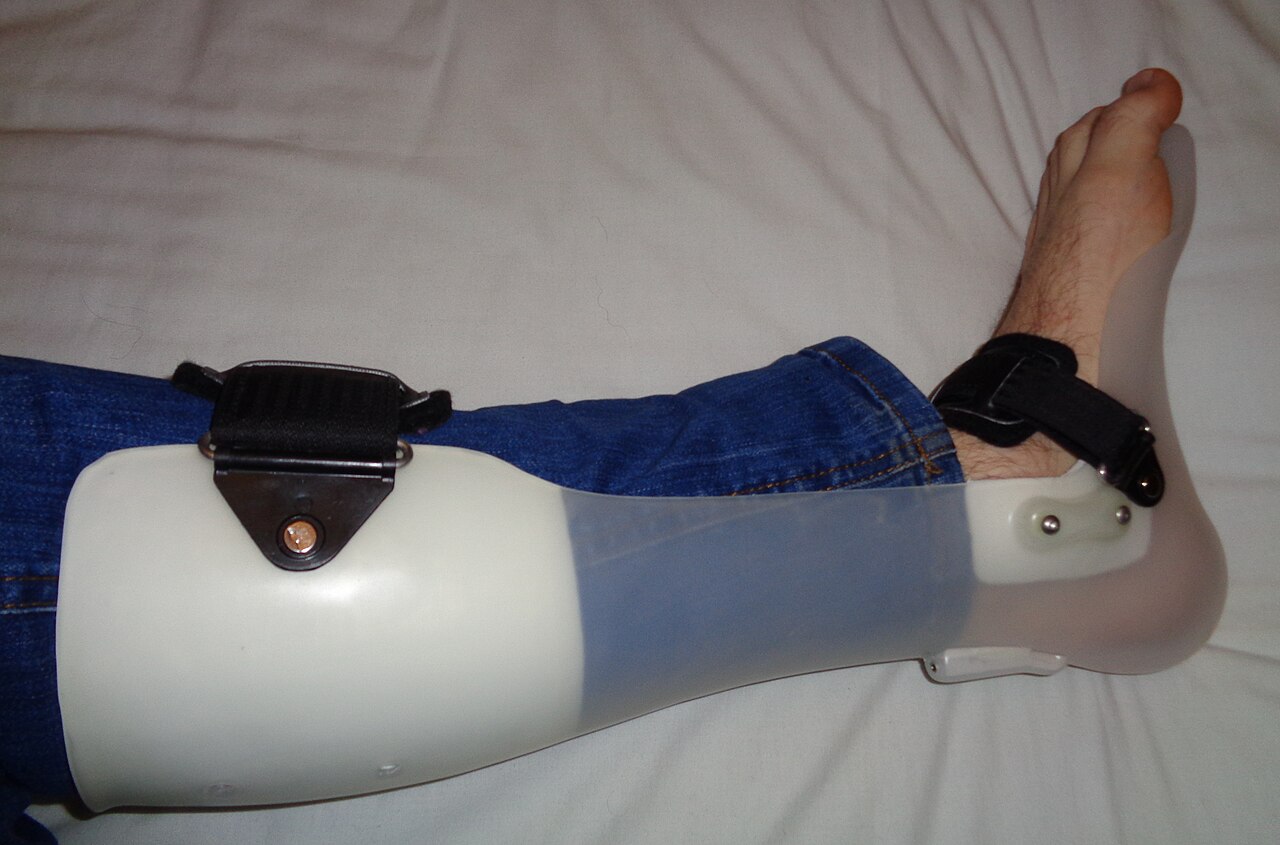
This article is general information for healthcare practices and is not medical, legal, coding or billing advice. Consult a qualified healthcare professional for diagnosis, treatment, and clinical decision-making. Code selection, fitting documentation and billing are the responsibility of the dispensing provider and are subject to payer policy. HCPCS Level II codes are maintained by the Centers for Medicare & Medicaid Services. CPT® is a registered trademark of the American Medical Association. Featured image: ankle foot orthosis, by Pagemaker787 via Wikimedia Commons, licensed CC BY-SA 4.0.
Ready to see the CMAT Advantage in your practice?
Book a free 25-minute demo: see the full PAD + autonomic workup and how the three established CPT codes apply, with no obligation. Backed by our 60-day buyback guarantee.
Book a Free Demo →