
Ancillary revenue for medical practices is income earned from clinical services added alongside standard office visits, such as in-office diagnostic testing, physician dispensing, point-of-care labs, chronic care management, and durable medical equipment. For independent physicians facing a lower Medicare conversion factor in 2027, these services are often the single most practical way to grow practice income while improving patient care. The seven streams below are the ones most primary care, cardiology, and pain-management practices can realistically add this year.
This guide explains what each ancillary revenue stream is, how it is reimbursed, which practices it fits best, and how to add it without running afoul of federal law. Several of these streams (in-office cardiovascular and neuropathy testing, in-office dispensing, and non-opioid electrotherapy) are areas HealthWright Technologies has helped independent practices build for more than two decades.
What is ancillary revenue for medical practices?
Ancillary revenue is the money a practice earns from services beyond the office visit itself. In a medical practice, that typically means diagnostics (labs, imaging, ECG, vascular and neuropathy testing), in-office pharmaceutical dispensing, durable medical equipment (DME), and care-coordination programs such as chronic care management.
These services share three traits that make them attractive: they use staff and space the practice already pays for, they are usually reimbursable by Medicare, and they let patients complete more of their care in one place.
What are ancillary orders in a medical practice?
An ancillary order is the instruction a physician writes for a service delivered alongside the office visit rather than as part of it: a lab panel, an imaging study, a diagnostic test, a course of therapy, or a piece of durable medical equipment. The visit itself is the evaluation and management service. The ancillary order is what the physician directs on top of it, and once that order is carried out it becomes an ancillary procedure, billed under its own CPT or HCPCS code instead of under the visit code.
Ancillary orders matter to practice income for one reason. Every order is either sent out of the practice, taking its reimbursement with it, or filled inside the practice. An order for vascular testing, an A1c, a knee brace and a prescription are all ancillary orders either way. Filling them in the office is what turns routine ordering into an ancillary revenue stream, and that is what the seven streams below describe.
Common ancillary orders in a primary care or specialty practice include:
- Laboratory orders, such as an A1c, a lipid panel or a urinalysis, run in a CLIA-certified in-office lab or sent to an outside lab.
- Diagnostic test orders, such as an ankle-brachial index, an ECG or autonomic function testing, performed in the exam room or sent to a hospital or vascular lab.
- Imaging orders, such as an X-ray or an ultrasound.
- Therapy orders, such as physical therapy or electrotherapy.
- Durable medical equipment orders, such as a knee brace or a walking boot, dispensed in the office or filled by an outside supplier.
- Prescriptions, filled at a retail pharmacy or dispensed at the point of care.
An ancillary order is not the same as a referral to another physician. A referral asks a specialist to evaluate the patient; an ancillary order directs one specific service, and the ordering physician stays responsible for documenting why it is needed.
Why do independent practices need ancillary revenue in 2027?
Medicare’s base rate is going down while costs go up. In the CMS calendar year 2027 physician fee schedule files, the conversion factor that turns every service’s relative value units into a payment falls to $32.6286 for most practices on January 1, 2027, about 2.3% below the 2026 factor of $33.4009 (practices that qualify as Advanced APM participants get $32.9548). Independent practices are absorbing rising labor and supply costs on top of that cut. Low-overhead, high-volume ancillary services are generally easier for an independent practice to add than capital-intensive investments such as a full imaging suite. Because margin compression is as much a cost problem as a revenue one, a new ancillary line works best alongside disciplined overhead management. HealthWright Technologies and Practice Management Consultancy are affiliated companies operated by the same team.
Adding a well-chosen ancillary revenue stream does two things at once. It creates a new, recurring reimbursement stream, and it keeps patients (and their downstream referrals) inside the practice instead of sending that revenue to a hospital or outside lab. Across primary care, pediatrics, OB-GYN, dermatology, and pain management, diagnostics in particular have shifted from a “nice to have” to a core operational capability.
7 ancillary revenue streams for medical practices
Below are seven proven ancillary revenue streams, ordered roughly from the highest-impact, lowest-overhead options for a typical independent practice to the more specialized ones. For each, we note how it earns, who it fits, and one thing to watch.
1. In-office cardiovascular and PAD testing
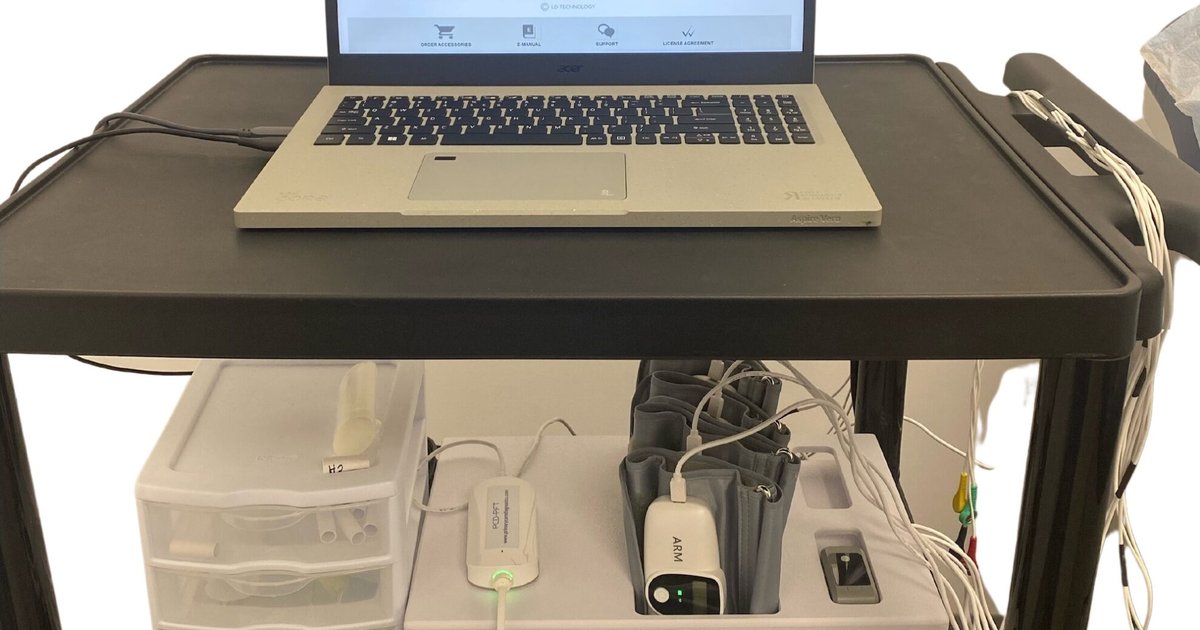
Non-invasive cardiovascular and peripheral arterial disease (PAD) testing lets a practice characterize vascular and autonomic problems in 7 to 10 minutes, in the exam room, without sending the patient out. These tests address diabetes complications, cardiovascular risk, and neuropathy. Coverage is set by the applicable Medicare Local Coverage Determination when the test is medically necessary and documented, so confirm current policy with your Medicare Administrative Contractor.
CMAT Advantage from HealthWright Technologies is built on FDA-cleared component devices and is billed under established CPT codes when medically necessary. Best for: primary care, cardiology, endocrinology, wound care, and pain-management practices with a chronic-disease patient base. Watch: reimbursement depends on documented medical necessity, so protocols and staff training matter as much as the device.
2. In-office physician dispensing
Physician (or point-of-care) dispensing lets a practice hand a patient their medication at the point of care instead of sending them to a pharmacy. Handing the medication over at the visit removes the trip to the pharmacy, which is one of the points where a prescription is abandoned, and it adds a margin on each fill.
HealthWright’s SCRIPT dispensing program checks insurance in real time, manages the formulary, and simplifies credentialing and billing so the workflow fits an existing front desk. Best for: practices whose patients fill predictable, recurring prescriptions. Watch: state dispensing rules vary, and dispensing to Medicare and Medicaid patients has specific requirements.
3. Point-of-care testing and in-office labs
Point-of-care testing (POCT) and CLIA-waived in-office labs cover the everyday panels a practice already orders: A1c, lipid panels, rapid infectious-disease tests, urinalysis, and more.
Best for: nearly every primary care and specialty practice; the startup investment is low and utilization is high. Watch: you need the correct CLIA certificate for the complexity of tests you run, and quality-control documentation is non-negotiable.
4. Chronic Care Management (CCM)
Chronic Care Management is a Medicare program that pays a practice to coordinate care for patients with two or more chronic conditions between visits. The core code, CPT 99490, covers at least 20 minutes of clinical staff time per patient per month and reimburses on a per-patient, per-month basis. Its 2027 relative value is slightly lower than in 2026 (1.95 against 1.98 non-facility RVUs in the CMS files), so with the lower conversion factor the per-patient payment dips in 2027 while the code itself is unchanged.
Best for: primary care and internal medicine panels with many older, multi-condition patients. Watch: CCM requires patient consent, a documented care plan, and careful time tracking. The revenue is real, but so is the documentation burden.
5. Remote Patient Monitoring (RPM)
Remote Patient Monitoring reimburses a practice for supplying a connected device (such as a blood-pressure cuff or glucometer) and reviewing the readings. Medicare pays a setup fee under CPT 99453 and a monthly device-supply fee under CPT 99454 (when the patient transmits data on 16 or more days), with additional codes for the clinical management time. Since January 1, 2026, two more codes cover shorter months: CPT 99445 pays the device-supply fee when the patient transmits on 2 to 15 days of the 30-day period, and CPT 99470 covers the first 10 minutes of management time in a month. Both carry over into the 2027 fee schedule, where the device-supply value of 99454 and 99445 falls from 1.56 to 1.26 non-facility RVUs.
Best for: practices managing hypertension, diabetes, or heart failure that can commit staff to reviewing data. Watch: RPM and CCM can be billed for the same patient, but the clinical time for each must be tracked and documented separately; it cannot be shared.
6. Non-opioid pain management and electrotherapy
As payers and regulators push practices toward non-narcotic options, in-office electrotherapy has become a legitimate ancillary line for pain-focused practices. HealthWright’s Hako-Med systems deliver Horizontal Therapy, an advanced electrotherapy used to support non-narcotic relief for neuropathy, chronic pain, and musculoskeletal conditions.
Best for: pain management, physical medicine, podiatry, and primary care practices treating chronic-pain and neuropathy patients. Watch: like any therapeutic service, coverage and documentation requirements vary by payer and diagnosis.
7. Durable medical equipment (DME) and bracing
Dispensing durable medical equipment (braces, supports, and similar items) at the point of care creates a modest margin and, more importantly, ensures the patient leaves with what they need. It pairs naturally with orthopedic, pain, and primary care visits.
Best for: practices that already prescribe braces or supports and want to capture that fulfillment in-house. Watch: DME is heavily regulated; suppliers must meet Medicare enrollment and supplier-standard requirements. Our guide to the rules for DME dispensing in a physician office covers enrollment, the physician exceptions that actually apply, and the documentation a claim depends on.
Which ancillary revenue streams are easiest to add? A comparison
The table below compares the seven ancillary revenue streams on the factors that decide whether a service is worth adding: how it earns, the typical startup investment, and the practices it fits best. “HealthWright-enabled” marks the streams HealthWright Technologies directly helps independent practices build.
| Ancillary revenue stream | How it earns | Typical startup investment | Best for | HealthWright-enabled |
|---|---|---|---|---|
| In-office cardiovascular & PAD testing | Per-test reimbursement | Moderate (device + training) | Primary care, cardiology, wound care | Yes: CMAT Advantage |
| In-office physician dispensing | Margin per fill | Low–moderate | Practices with recurring prescriptions | Yes: SCRIPT program |
| Point-of-care testing & labs | Per-test reimbursement | Low | Nearly all practices | No |
| Chronic Care Management (CCM) | Per patient, per month (CPT 99490) | Low (staff time) | Multi-condition primary care panels | No |
| Remote Patient Monitoring (RPM) | Setup + monthly device fees (CPT 99453, 99454 or 99445) | Moderate (devices) | Chronic-disease management | No |
| Non-opioid pain & electrotherapy | Per-treatment reimbursement | Moderate (device) | Pain, PM&R, podiatry | Yes: Hako-Med |
| DME & bracing | Margin per item | Low | Orthopedic, pain, primary care | Yes: DME bracing catalog |
How much can ancillary services add to practice revenue?
The honest answer is that it depends on your patient panel and the service, but the math on even one stream is compelling. Because most ancillary revenue is recurring and uses staff you already employ, a modest volume compounds quickly across a year.

Take chronic care management as a transparent example. Medicare reimburses CPT 99490 on a per-enrolled-patient, per-month basis, on patients a primary care practice already sees. Actual results depend on panel size, eligibility, and program costs.
Practices commonly combine more than one of these services on the same visits. In-office cardiovascular or neuropathy testing is reported under its own CPT codes when it is medically necessary and documented, and coverage is set by your Medicare Administrative Contractor. None of these requires a new building or a new specialty, only the equipment, training, and workflow to deliver a service the practice is already referring out.
The point is not any single headline number. It is that ancillary revenue for medical practices stacks: a diagnostics line, a dispensing margin, and a care-coordination code can each be modest on their own yet together replace the margin that flat reimbursement keeps eroding. Model each ancillary revenue stream against your own payer mix and volume before you commit, and start with the one your patients already need.
How do you choose the right ancillary service for your practice?
Start with your existing patient panel, not the service. The best ancillary revenue for a medical practice is the one that answers a need your patients already have, so the referrals you are currently sending elsewhere come back in-house. For a perspective from our affiliated consultancy on prioritizing which services fit your practice, see this guide to ancillary services for medical practices. HealthWright Technologies and Practice Management Consultancy are affiliated companies operated by the same team.
- Match the service to your diagnoses. A practice full of diabetic and cardiovascular patients is a natural fit for in-office vascular and neuropathy testing; a hypertension-heavy panel fits RPM.
- Favor low-overhead, high-volume services first. POCT labs, dispensing, and care-coordination codes use staff and space you already pay for.
- Count the true startup cost. Include the device, training, credentialing, and the staff time to run the workflow, not just the equipment price.
- Confirm reimbursement before you commit. Verify that your major payers cover the service and what documentation they require.
How do you add ancillary services without breaking the law?
Ancillary services sit squarely inside two federal laws: the physician self-referral law, or Stark Law, and the Anti-Kickback Statute. Both govern how a practice can own, refer to, and profit from services it provides. Enforcement is increasing, so structure matters.
Most compliant practices rely on the in-office ancillary services exception under Stark, keep ownership at the group level rather than in partner-specific carve-outs, and document medical necessity for every service billed. Because the penalties are steep and the rules are fact-specific, experienced healthcare counsel should review any ancillary arrangement before you launch it. How you tell patients about a new service matters too; our guide to ethical marketing and patient education for in-office testing covers the claims to avoid. This article is educational and is not legal advice.
How does HealthWright Technologies help practices add ancillary revenue?
HealthWright Technologies is a Georgia-based healthcare technology company, headquartered at 60 Bear Creek Marina Road, Mansfield, GA 30055, that has equipped independent physicians nationwide with diagnostic and therapeutic devices since 2000. Rather than sell hardware and walk away, HealthWright pairs its CMAT Advantage system with training, implementation, and billing guidance so the ancillary revenue stream actually earns.
Four of the seven streams above map directly to HealthWright’s catalog:
- In-office cardiovascular, PAD, and autonomic testing through the CMAT Advantage system, a non-invasive 7-to-10-minute test built on FDA-cleared component devices.
- In-office physician dispensing through the SCRIPT program, with real-time insurance checks and formulary management.
- In-office DME dispensing through the DME bracing catalog, with per-patient ordering and direct shipment to the practice.
- Non-opioid pain management through Hako-Med electrotherapy systems for neuropathy and chronic pain.
To see the numbers behind in-office diagnostics, read our deeper look at the business case for adding CMAT Advantage testing and our guide to building an in-office diagnostics program. For the dispensing stream, see the benefits of physician dispensing software, and for the reimbursement details, review our notes on reimbursement and coding for the TM-Flow system and our primer on medical device purchasing. You can also compare testing approaches in our guide to PAD testing in primary care and see the full lineup on our products page.
What mistakes should you avoid when adding ancillary revenue?
Most ancillary revenue disappointments come from a few avoidable errors, not from the services themselves. Knowing them in advance keeps a promising ancillary revenue stream from becoming a stranded cost.
- Buying the equipment before the workflow. A device or program only earns when staff know how to deliver, document, and bill it. Budget for training and workflow design, not just the purchase.
- Skipping the payer check. Confirm that your major payers cover the service and what documentation they require before you invest, so you are not billing into denials.
- Ignoring the compliance structure. Ancillary services touch Stark and Anti-Kickback rules; launching without counsel is the most expensive shortcut a practice can take.
- Chasing the trendiest service instead of the fitting one. The best ancillary revenue for a medical practice matches the patients you already see, not the highest theoretical margin.
- Treating it as one-and-done. Track utilization and reimbursement monthly, and adjust; ancillary revenue rewards the practices that manage it like a service line.
Avoid those five and most practices find that adding ancillary revenue is far less disruptive than they feared, and far more durable than another round of cost-cutting.
Frequently asked questions about ancillary revenue for medical practices
What are ancillary services in a medical practice?
Ancillary services are clinical services a practice provides alongside standard office visits, such as in-office diagnostic testing, point-of-care labs, physician dispensing, durable medical equipment, and care-coordination programs like chronic care management. They add revenue while letting patients complete more of their care in one place.
What is the best ancillary revenue stream for a small practice?
For most small practices, the highest-value starting points are low-overhead, high-volume services that use staff and space you already have: point-of-care labs, in-office dispensing, and chronic care management. A practice with many cardiovascular or diabetic patients should also weigh in-office vascular and neuropathy testing, which is reported under established CPT codes when medically necessary and documented. Whichever stream you pick, settle the staffing question early, because the rules differ by service type: our guide to incident to billing and the 7 conditions Medicare applies explains when a staff-furnished service can be billed under the physician’s NPI, and why a diagnostic test follows a separate supervision rule.
Is ancillary revenue from in-office testing reimbursed by Medicare?
Yes. Most established ancillary services, including in-office diagnostics, labs, chronic care management, and remote patient monitoring, are reimbursable by Medicare when they are medically necessary and properly documented. Reimbursement rules and rates vary by service and payer, so confirm coverage before you add a service.
How much can a practice earn from chronic care management?
Under CPT 99490, Medicare reimburses practices per enrolled patient per month for at least 20 minutes of care-coordination time, in 2026 and again in 2027. Practices that enroll a meaningful share of their eligible chronic-disease patients can build a recurring monthly revenue line, though the program requires patient consent and careful time tracking.
Are ancillary services legal for physicians to own?
Generally yes, but they are governed by the Stark Law and the Anti-Kickback Statute. Many practices use the in-office ancillary services exception under Stark and keep ownership at the group level. Because the rules are fact-specific and enforcement is increasing, have experienced healthcare counsel review any arrangement before launch.
Start building your ancillary revenue plan
Ancillary revenue is how many independent practices are protecting their margins as the 2027 conversion factor falls, and in-office diagnostics, dispensing, and non-opioid pain management are three of the most accessible places to start. HealthWright Technologies can help you evaluate which fits your patient panel and handle the training, implementation, and billing guidance that make it work. To talk through the options for your practice, contact HealthWright Technologies or learn more about our team.
Disclaimer: This article is for general educational purposes for healthcare professionals and is not medical, legal, billing, or financial advice. Reimbursement rates and coding rules change and vary by payer, locality, and clinical circumstances; verify current requirements with your payers and advisors. CPT® is a registered trademark of the American Medical Association. HealthWright Technologies’ devices are FDA-cleared; consult the applicable product labeling and your own compliance counsel before adding any ancillary service.
Disclaimer: This article is for informational purposes only and does not constitute medical advice. Always consult a qualified healthcare professional for diagnosis, treatment, and clinical decision-making.
Ready to see the CMAT Advantage in your practice?
Book a free 25-minute demo: see the full PAD + autonomic workup and how the three established CPT codes apply, with no obligation. Backed by our 60-day buyback guarantee.
Book a Free Demo →