The KX modifier is a two character code you add to a claim line to attest that the coverage requirements in the applicable Medicare policy have been met, and that the documentation to prove it is already on file. Most guidance you will find online covers one narrow use, the physical and occupational therapy threshold, where the code signals that care above a yearly dollar amount is still medically necessary. For a practice that dispenses durable medical equipment (DME) and orthotic braces in your own office, it does something different and far more routine.
On a DME or orthosis claim, it tells the DME MAC that every coverage criterion in the Local Coverage Determination (LCD) is satisfied for that patient, and that your records back it up. Add it correctly and the claim can move forward. Append the KX modifier without the documentation and you have made an attestation you cannot support, which is exactly what post payment auditors look for. This guide is written for the physician, biller, or office manager who hands a brace or a piece of equipment to a patient and bills for it. HealthWright Technologies supplies the devices. Your practice chooses the code, documents the medical need, and files the claim, so the rules below are yours to own.
What does the KX modifier mean?
Medicare’s official HCPCS descriptor for the code is short: “Requirements specified in the medical policy have been met.” That is the whole definition, and it is deliberately empty, because the actual requirements live in whatever coverage policy applies to the item on the line.
The DME MAC Noridian states the attestation plainly. Using the KX modifier “indicates that the supplier has ensured coverage criteria for the DMEPOS billed is met and that documentation does exist to support the medical necessity of item.” Two things must already be true before it goes on the claim: the criteria are met, and the proof is on file. Noridian adds one line that practices forget, “Documentation must be available upon request.” You are not sending the records with the claim. You are promising they exist, and that Medicare can ask to see them later.
When do you add it to a DME or orthosis claim?
Each DME policy names the codes that carry the requirement. For orthotic braces, the Medicare policy article is explicit. “Suppliers must add a KX modifier to the KO base and addition codes only if all of the coverage criteria in the ‘Coverage Indications, Limitations, and/or Medical Necessity’ section of the related LCD have been met and evidence of such is retained in the supplier’s files and available to the DME MAC upon request.” That language is from the knee orthosis policy article; the ankle and foot orthosis article uses the same wording for its own base and addition codes.
On these orthosis policies, one of three liability markers is required, not optional: “Claims lines billed with codes without a KX, GA or GZ modifier will be rejected as missing information.” So every covered orthosis line gets a KX, a GA, or a GZ, depending on whether the criteria are met and what notice the patient signed. It is not a universal add on. The requirement differs by policy, and appending the KX modifier to an item that no LCD assigns it to is incorrect use. When a code is new to you, read the specific LCD and its policy article, and confirm the current rule with your own DME MAC before you bill.
What documentation has to be on file?
The attestation is only as good as the chart behind it. Before you append the KX modifier, the file should hold the physician’s order, the clinical notes that establish medical necessity under the LCD, proof that the item reached the patient, and any policy specific element the LCD names, such as a measurement, a trial of conservative care, or a face to face note. Our guide to DME proof of delivery covers the delivery record in detail.
This is where the KX modifier earns its reputation with auditors. In a 2012 review, the HHS Office of Inspector General found that the modifier “was not effective in ensuring that suppliers of DMEPOS that submitted Medicare claims had the required supporting documentation on file.” It reported that Medicare paid “approximately $316.4 million to suppliers that did not have the required documentation on file to support the DMEPOS items with 2007 dates of service.” The modifier does not create a record. It states that one already exists, so the safe habit is to confirm the chart is complete before the claim ever leaves the office.

How is it different from the GA, GX, GY, and GZ modifiers?
Those are the liability modifiers, and they answer a different question: who pays if Medicare does not. Our full guide to the GA, GX, GY, and GZ modifiers goes deeper. Here is how each one reads against the KX, using Noridian’s own descriptions.
- KX: the coverage requirements in the policy are met. Use it when you expect the item to be covered.
- GA: “Waiver of Liability statement on file. Valid Advance Beneficiary Notice of Noncoverage (ABN) obtained.” You expect a medical necessity denial and the patient signed an ABN.
- GZ: the item is “expected to be denied as not reasonable or necessary” and you did not obtain a valid ABN. These lines are denied automatically.
- GY: the item is “statutorily excluded or does not meet the definition of any Medicare benefit” at all.
- GX: a voluntary ABN was issued for an item that is statutorily noncovered.
The practical rule the orthosis denial guidance gives is simple: “The KX modifier should only be appended to claims when all the coverage criteria from the policy have been met; otherwise, the GA or GZ modifier should be appended.” The KX modifier and the GA or GZ pair are mutually exclusive on a line, because they make opposite statements. One says the criteria are met. The others say you expect a denial.
Seven rules for using it correctly
- Read the LCD and its policy article for the exact code, every time. The requirements it points to are the only thing you are attesting.
- Confirm the documentation is in the chart before the claim goes out, not after a request arrives.
- Put the KX modifier on the specific lines the policy names, usually the base code and its additions, not the whole claim.
- Never pair it with GA, GZ, or GY on the same line. Pick the one marker that matches reality.
- If the criteria are not met, do not reach for the KX modifier to force the claim through. Use GA with an ABN, or GZ without one.
- Keep the proof of delivery and the medical necessity notes together, so an audit request is a five minute pull.
- Recheck the policy each year. Coverage criteria and the codes that require the modifier change, and a rule that was right last year can be wrong now.
What about the therapy threshold?
If your practice also bills outpatient physical, occupational, or speech therapy, you will meet the same two letters in a completely separate context. There, the code is the exceptions flag for the annual therapy threshold, the former therapy cap. Once a patient’s therapy spending passes a yearly amount, you add it to keep billing medically necessary services above that line.
For calendar year 2026, CMS sets that threshold at “$2,480 for PT and SLP services combined, and $2,480 for OT services,” with a separate targeted medical review threshold of $3,000. There, the KX modifier confirms that care above the line is still medically necessary. Those dollar figures and the mechanics behind them belong to therapy billing, not to DME, so do not carry the therapy logic onto a brace claim or the reverse. Same two letters, two different rulebooks.
A note for practices that dispense braces in-office
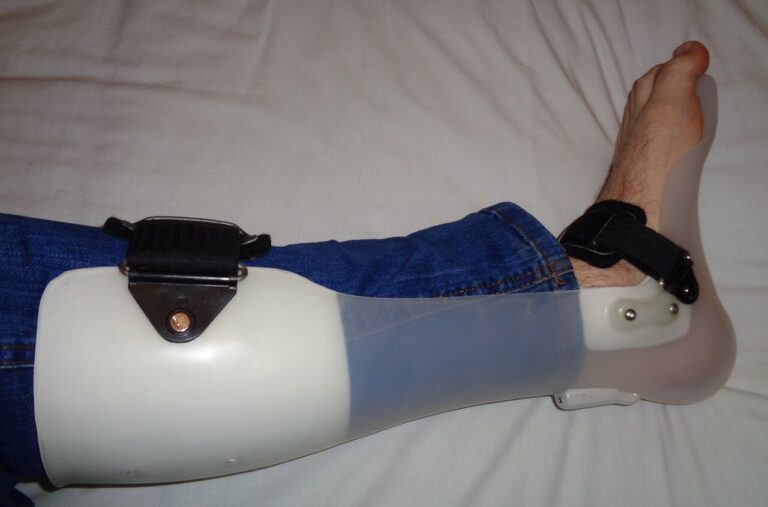
Many of the orthoses a physician office hands out, the ankle and foot braces, knee braces, walking boots, and back and cervical supports, fall under Medicare orthosis policies that require the KX modifier on the base and addition codes. The code you choose comes from the HCPCS Level II L code set, and the coverage criteria you are attesting to come from the matching LCD. Our HCPCS code guide for orthotic braces and the code by code walkthroughs, including ankle-foot orthosis HCPCS codes, map the common in-office braces to their codes.
HealthWright Technologies supplies the braces through its DME bracing line. We do not fit, dispense, or bill them, and a HCPCS reference on a product page is a catalogue pointer, not a promise that Medicare will cover or pay. Coverage and the attestation are the dispensing practice’s call, made against the live LCD for each patient. Getting the documentation right before you append the KX modifier is the difference between a clean claim now and a refund request two years from now.
This article is general coding education, not billing, legal, or clinical advice. Coverage rules, codes, and thresholds change, and they vary by DME MAC and payer, so verify the current policy with your own MAC before you bill. CPT is a registered trademark of the American Medical Association.
Thinking about adding in-office DME and orthosis dispensing to your practice? Contact HealthWright Technologies or email contact@healthwrighttechnologies.com to talk through the equipment and the setup, or call (706) 460-2633 and we will follow up.
Frequently asked questions
Does adding KX guarantee that Medicare will pay?
No. It attests that the coverage criteria are met and that your documentation supports the claim. Medicare can still review the claim and ask for the records, and if they do not support the attestation the payment can be recouped. The KX modifier moves the claim past an edit; it does not settle medical necessity.
Can you put KX and GA on the same claim line?
No. They make opposite statements. KX says the criteria are met; GA says you expect a denial and have an ABN on file. Choose the one that matches the patient’s situation on that line.
Which orthosis codes need it?
The base code and its addition codes for the braces named in the relevant orthosis LCD, such as the knee and the ankle and foot orthosis policies. Read the policy article before you add the KX modifier, because the list of codes changes and the requirement differs by policy.
Is it only for DME?
No. The KX modifier also flags the outpatient therapy threshold exception for PT, OT, and speech therapy, and it appears in a few other Medicare contexts. The DME and the therapy uses follow different rules, so match the use to the claim in front of you.
Ready to see the CMAT Advantage in your practice?
Book a free 25-minute demo: see the full PAD + autonomic workup and how the three established CPT codes apply, with no obligation. Backed by our 60-day buyback guarantee.
Book a Free Demo →