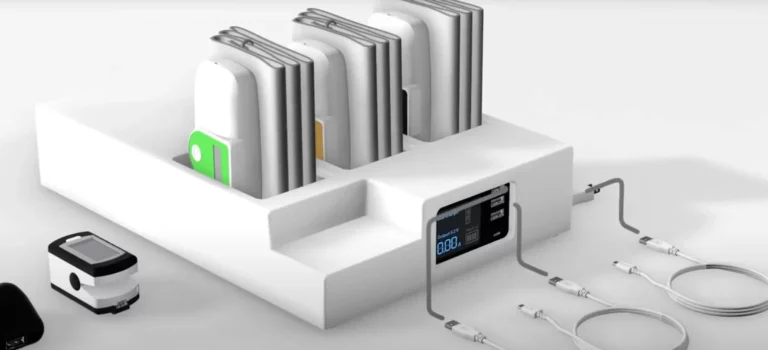
Cardiovascular disease remains the leading cause of death in the United States. For independent practices, the challenge is rarely awareness of that risk; it is having objective data on the patients who present with risk factors or early symptoms. The CMAT Advantage system gives physicians non-invasive, objective vascular and autonomic measurements in a single 7 to 10 minute session, supporting the evaluation of patients who already show signs, symptoms, or documented risk factors for vascular and autonomic disease. The measurements are captured on FDA-cleared component hardware and documented for the chart: objective, audit-defensible support for clinical decisions, not a blanket test applied to every patient.
Postural blood pressure change is a simple objective marker worth capturing alongside the rest of the panel. See our guide to orthostatic hypotension testing for the measurement protocol and the fall-risk context in older patients.
What Vascular and Autonomic Dysfunction Means for At-Risk Patients
Vascular dysfunction develops when arteries begin losing their ability to dilate and constrict properly, a process called endothelial dysfunction, and is often already present in patients who carry cardiovascular risk factors such as diabetes, hypertension, or a history of smoking. Traditional risk assessments rely on cholesterol panels, blood pressure readings, and family history. Those identify statistical risk factors; they do not measure how a specific patient’s vessels and autonomic nervous system are actually functioning. For a patient who presents with claudication, neuropathic symptoms, poorly controlled diabetes, or other documented risk factors, objective functional measurements add information a risk calculator cannot.
The CMAT Advantage system measures vascular function directly through ankle-brachial index (ABI), toe-brachial index (TBI), and volume plethysmography waveforms. Combined with autonomic assessment, including heart rate variability (HRV), Ewing battery tests, and sudomotor function, it produces an objective functional profile that complements, rather than replaces, the physician’s clinical evaluation.
How Does Heart Rate Variability Add Objective Context to Cardiovascular Evaluation?
Heart rate variability (HRV) measures the beat-to-beat variation in heart rhythm governed by the autonomic nervous system. Reduced HRV is a recognized marker associated with increased cardiovascular risk, and HRV analysis adds objective autonomic data to the evaluation of at-risk patients.
The CMAT Advantage system performs time-domain and frequency-domain HRV analysis as part of its standard testing protocol. This data can help characterize:
- Sympathetic-parasympathetic balance: An overactive sympathetic nervous system (fight-or-flight) is associated with hypertension and arrhythmia
- Cardiac autonomic neuropathy (CAN): A recognized complication of long-standing diabetes that objective autonomic measurement helps characterize in symptomatic diabetic patients
- Autonomic dysfunction in at-risk patients: Objective HRV data can support clinical decisions on monitoring, lifestyle modification, and medication management
For primary care physicians, HRV analysis adds an objective, physiological measurement to cardiovascular evaluation, documented alongside the patient’s other findings.
What Does a CMAT Advantage Cardiovascular Assessment Measure?
A single CMAT Advantage testing session captures multiple data points relevant to cardiovascular and autonomic evaluation, many of which would otherwise require referral to a vascular lab:
- Ankle-Brachial Index (ABI): An objective vascular measurement physicians use when evaluating for peripheral arterial disease; values below 0.9 are consistent with significant arterial obstruction
- Toe-Brachial Index (TBI): Useful for diabetic patients, where arterial calcification can produce falsely normal ABI readings
- Heart Rate Variability (HRV): Provides objective autonomic data that adds context to a cardiovascular evaluation
- Ewing Battery Tests: Standardized measurements of cardiovascular autonomic response, including deep breathing, Valsalva maneuver, and orthostatic responses
- Sudomotor Function: Galvanic skin response measurement that provides objective data on small-fiber autonomic function, often relevant when evaluating diabetic patients
- Volume Plethysmography: Records arterial pulse volume waveforms at the arm and ankle
Measurements are captured on FDA-cleared component hardware, automated, and documented in clinical reports generated on the CMAT Advantage system, ready for chart documentation, payer submission, and specialist referral. The system provides measurements for physician interpretation and does not itself render a diagnosis.
How Does CMAT Advantage Fit Into a Cardiovascular Evaluation Workflow?
Integrating CMAT Advantage testing into a cardiovascular evaluation workflow requires minimal disruption to existing practice operations. Most practices follow this model:
- Patient identification: Identify patients who present with signs, symptoms, or documented risk factors (diabetes, peripheral symptoms, poorly controlled hypertension, or established vascular disease) for whom objective vascular or autonomic testing is clinically indicated
- Testing during the visit: A trained medical assistant performs the 7 to 10 minute CMAT Advantage assessment before the physician encounter, similar to a standard diagnostic workflow
- Physician interpretation: The system generates a color-coded clinical summary that physicians review during the patient visit, identifying findings that warrant attention
- Treatment and referral decisions: Abnormal findings guide medication management, lifestyle counseling, or referral to cardiology or vascular surgery, with objective data supporting the referral
- Follow-up monitoring: When clinically indicated, repeat testing tracks treatment response and disease progression, supporting ongoing management decisions with objective, documented data
Frequently Asked Questions About Cardiovascular Testing With CMAT Advantage
Is the CMAT Advantage system FDA-cleared for cardiovascular assessment?
The CMAT Advantage system is built on FDA-cleared component devices (including the 510(k)-cleared ABI module) for non-invasive vascular and autonomic measurement. It provides objective measurements for physician interpretation and does not itself render a diagnosis. There is no single integrated “CMAT Advantage” clearance; clearances apply to the underlying component devices.
How does CMAT Advantage testing differ from a standard stress test?
A stress test evaluates cardiac function under physical exertion. CMAT Advantage measures vascular and autonomic function at rest, providing objective data relevant to peripheral arterial disease, autonomic dysfunction, and circulatory function that a stress test does not capture. The two are complementary rather than competing assessments.
How is CMAT Advantage testing billed?
ABI testing (CPT 93923) and autonomic function testing may be billable under established CPT codes when the testing is medically necessary and supported by documentation. Coverage varies by payer. HealthWright Technologies provides billing guidance and implementation support as part of the CMAT Advantage partnership.
Can primary care practices perform this testing or is it limited to cardiology?
Primary care practices are a well-suited setting for CMAT Advantage testing. The system was designed for non-specialist use, with medical assistants performing the test under physician supervision. This brings objective vascular and autonomic testing into the primary care setting, where physicians can evaluate at-risk patients with documented, objective data.
How quickly can a practice start performing cardiovascular assessments?
Installation, staff training, and billing setup are scheduled with your practice after purchase, and HealthWright confirms your timeline during onboarding. HealthWright Technologies provides equipment setup, staff training, billing configuration, and ongoing technical support as part of the partnership program.
Add objective vascular and autonomic testing to your practice. Contact HealthWright Technologies to learn how the CMAT Advantage system supports the evaluation of your at-risk patients with audit-defensible, documented measurements.
HealthWright Technologies
60 Bear Creek Marina Road, Mansfield, GA 30055
Phone: (678) 322-7146
Email: contact@healthwrighttechnologies.com
Medical Disclaimer: This article is for informational purposes only and does not constitute medical advice. The CMAT Advantage system is built on FDA-cleared component devices and provides measurements for physician interpretation; it does not itself render a diagnosis. Testing should be ordered based on individual clinical evaluation and medical necessity. CPT codes are provided for reference and do not guarantee reimbursement; coverage varies by payer. CPT is a registered trademark of the American Medical Association.
Ready to see the CMAT Advantage in your practice?
Book a free 25-minute demo: see the full PAD + autonomic workup and how the three established CPT codes apply, with no obligation. Backed by our 60-day buyback guarantee.
Book a Free Demo →