Orthostatic hypotension testing is the in-office measurement of how a patient’s blood pressure and heart rate respond to standing, used to evaluate a common contributor to falls in older adults when symptoms or a fall history are documented. The consensus definition is a sustained drop of at least 20 mmHg systolic or 10 mmHg diastolic within three minutes of standing (American Autonomic Society, 2011). For independent practices building a fall-prevention program, orthostatic hypotension testing turns a frequently overlooked bedside check into a standardized, documentable, and reimbursable part of the older-adult visit. Comprehensive systems such as the FDA-cleared CMAT Advantage™ add objective cardiovascular autonomic assessment on top of the manual postural reading, so a practice can see not just the pressure drop but the autonomic regulation behind it.
This guide covers what orthostatic hypotension testing is, why it matters for fall risk, who may warrant testing, and how to run it inside a busy independent practice. HealthWright Technologies is a Georgia-based medical device company that equips physicians with the diagnostic tools described here; it does not provide direct patient care.
What is orthostatic hypotension testing?
Orthostatic hypotension testing measures blood pressure and heart rate first with the patient at rest and then after standing, looking for an abnormal drop that signals the circulatory system is not adjusting to the upright position. The standard threshold is a fall of at least 20 mmHg systolic or 10 mmHg diastolic within three minutes of standing. Because the drop can appear early or be delayed, readings are commonly taken soon after standing and again near the three-minute mark.
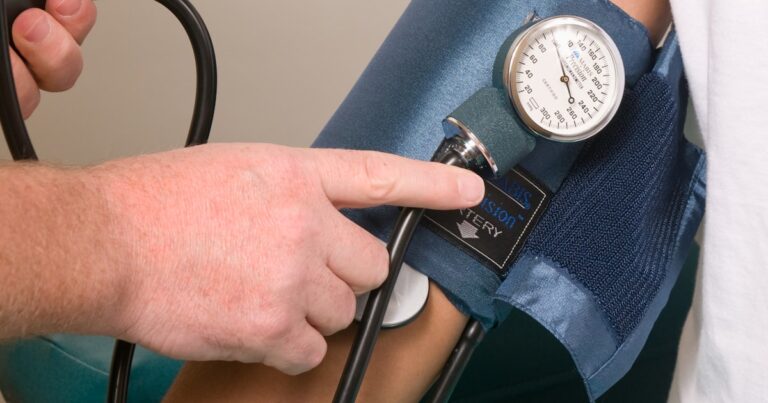
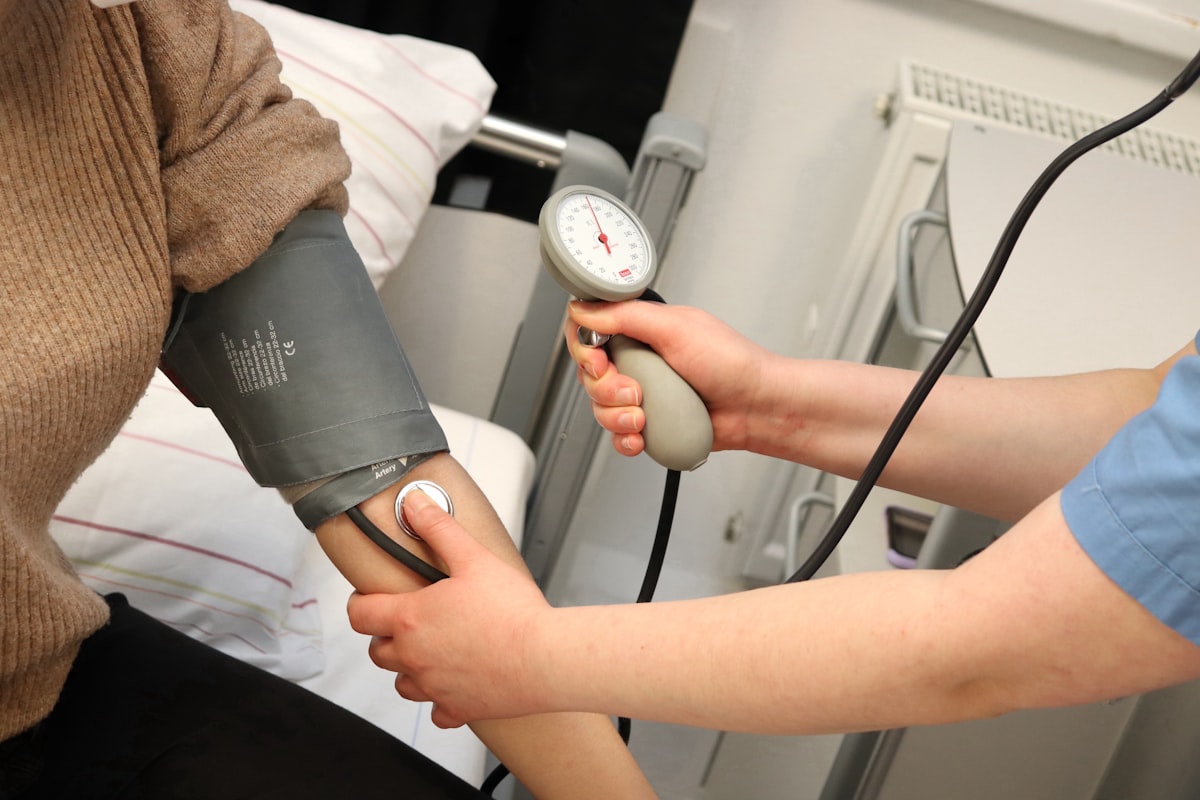
A simple version of this test uses a manual or automated cuff at the bedside. A more complete version pairs that postural reading with objective cardiovascular autonomic testing, including heart rate variability and the cardiovascular autonomic reflex tests, to reveal whether an autonomic problem is driving the pressure drop. Standing blood pressure is a frequently overlooked but clinically important measurement, which is exactly why a structured protocol matters. For a practical clinical overview, the American Academy of Family Physicians outlines a stepwise approach to evaluating orthostatic hypotension.
Why does orthostatic hypotension testing matter for fall risk in older adults?
Falls are a serious, costly, and often preventable threat to older adults. According to the CDC, more than one in four adults aged 65 and older falls each year, and less than half tell their doctor. These falls drive about three million emergency department visits and roughly one million hospitalizations annually, and about 37 percent of people who fall report an injury that requires medical care or restricts activity for at least a day.
Orthostatic hypotension is one of the more common and modifiable pieces of that picture. Its prevalence rises with age and reaches approximately 20 percent in adults 60 years and older (Kim and Farrell, American Family Physician, 2022). In community-dwelling older adults with a history of falls, one study measured orthostatic hypotension in 23.4 percent of patients at the 30-second mark. Research consistently links the condition to falls, and it is associated with increased morbidity and mortality. Orthostatic hypotension testing gives a practice an objective way to find this risk before the next fall, rather than after it. The CDC’s STEADI initiative recommends that providers assess older adults for fall risk, and its resources specifically include guidance on postural (orthostatic) hypotension.
Who should receive orthostatic hypotension testing?
Orthostatic hypotension testing is most valuable for patients whose age, medications, or conditions raise their risk. Priority groups include:
- Adults 75 and older, where prevalence is highest and a fall carries the greatest consequences.
- Patients with diabetes, in whom cardiovascular autonomic neuropathy can produce neurogenic orthostatic hypotension. Objective cardiovascular autonomic neuropathy testing helps document this when it is suspected.
- Patients on multiple medications, especially antihypertensives, diuretics, and drugs with blood-pressure-lowering effects, where polypharmacy compounds the drop.
- Anyone reporting dizziness, lightheadedness, or a prior fall, since symptoms often bring the risk to attention even when the condition is otherwise silent.
- Patients with Parkinson’s disease or related autonomic disorders, which commonly involve blood-pressure dysregulation.
Orthostatic hypotension is not always symptomatic, which is why guideline groups support routine postural checks in older adults at fall risk. Building orthostatic hypotension testing into the routine older-adult visit is the most reliable way to document it.
How does orthostatic hypotension testing work in an independent practice?
At its simplest, a staff member records the patient’s blood pressure and heart rate after several minutes of rest, has the patient stand, and repeats the readings at about one and three minutes. A drop that meets the threshold, or a symptomatic drop below it, is flagged for the physician.
A more complete workup adds objective cardiovascular autonomic testing. The CMAT Advantage system, built on the TM-Flow platform, performs this assessment non-invasively in roughly 7 to 10 minutes. It captures heart rate variability and the cardiovascular autonomic reflex tests, which examine how heart rate and blood pressure respond to standing, breathing, and other maneuvers. That autonomic view helps distinguish a one-time reading from a genuine pattern of dysfunction, and it documents the finding in a standardized report. Practices already using the platform for PAD testing in primary care can extend the same visit to include autonomic assessment.

What does autonomic testing add beyond a manual blood-pressure check?
A cuff reading tells you that pressure dropped. It does not tell you why. Comprehensive autonomic testing helps separate neurogenic orthostatic hypotension, driven by autonomic failure, from causes such as volume depletion or medication effect. That distinction changes the workup and the plan. The table below compares the two approaches.
| Feature | Manual postural blood-pressure check | Comprehensive autonomic testing (CMAT Advantage) |
|---|---|---|
| What it measures | Blood-pressure and heart-rate change on standing | Postural response plus heart rate variability and autonomic reflex tests |
| Identifies neurogenic cause | Limited | Supports it, by characterizing autonomic function |
| Objectivity and documentation | Depends on technique | Standardized, device-generated report |
| Typical time | A few minutes | About 7 to 10 minutes, non-invasive |
| Reimbursable ancillary service | Bundled with the visit | Recognized autonomic function testing |
| Best for | Quick postural check when fall risk is documented | Patients with abnormal or symptomatic postural checks, or diabetes and autonomic risk |
Used together, the two approaches form a practical pathway: check patients with documented fall risk with a postural measurement, then confirm and characterize the finding with objective autonomic nervous system testing when the check is abnormal. Heart rate variability testing is one component that adds depth to the assessment.
The 7 essentials of orthostatic hypotension testing for fall-risk programs
These seven essentials help an independent practice run orthostatic hypotension testing consistently and turn results into action.
- Use the consensus definition. Flag a drop of at least 20 mmHg systolic or 10 mmHg diastolic within three minutes of standing, and note symptoms even when the numbers fall short. Best for: consistent, defensible documentation.
- Get the timing right. Rest the patient supine, then read soon after standing and again near three minutes, because early and delayed patterns behave differently. Best for: catching orthostatic hypotension that a single reading misses.
- Target the highest-risk patients. Prioritize adults 75 and older, patients with diabetes or autonomic disorders, and those on multiple blood-pressure medications. Best for: finding the most risk with the least added time.
- Look beyond the number. Add objective autonomic assessment to identify neurogenic orthostatic hypotension a single cuff reading cannot explain. Best for: patients with abnormal or symptomatic postural checks.
- Standardize the protocol. A written, device-supported protocol reduces technique variability and makes results repeatable across staff. Best for: multi-provider and multi-location practices.
- Connect testing to a pathway. Link results to a medication review, hydration guidance, and referral when needed, in line with the CDC STEADI framework. Best for: turning a finding into a fall-prevention action.
- Build it as an ancillary service. Objective autonomic function testing is a recognized in-office service that supports both patient care and practice revenue. Best for: sustainable, reimbursable fall-risk programs.
How does orthostatic hypotension testing fit a practice’s ancillary-revenue strategy?
For independent practices, orthostatic hypotension testing sits inside a larger move toward in-office diagnostics. Objective autonomic function testing is a recognized, billable service, and adding it lets a practice serve its Medicare-age population more completely while supporting the bottom line. Many practices fold it into a broader menu alongside vascular and metabolic testing, an approach explored in our guide to ancillary revenue for medical practices. For coding details, see our overview of the autonomic function testing CPT code, and always confirm current codes and coverage with the relevant payer.
Endocrinology and metabolic practices in particular find natural overlap, since diabetes drives much of the autonomic dysfunction behind neurogenic orthostatic hypotension. Our look at the TM-Flow system in endocrinology and our companion piece on vascular testing for nephrology practices show how the same platform supports several specialties from one workflow.
Frequently asked questions about orthostatic hypotension testing
What blood pressure drop defines orthostatic hypotension?
Orthostatic hypotension is defined as a sustained decrease of at least 20 mmHg systolic or 10 mmHg diastolic within three minutes of standing or head-up tilt, per the American Autonomic Society consensus. Symptomatic drops below this threshold still warrant attention.
How long does orthostatic hypotension testing take?
A manual postural blood-pressure check takes only a few minutes. A comprehensive autonomic assessment with the CMAT Advantage system is non-invasive and takes roughly 7 to 10 minutes, which fits within a routine older-adult visit.
Is orthostatic hypotension testing worthwhile if the patient has no symptoms?
Orthostatic hypotension can be present without obvious symptoms. Guideline groups such as the CDC STEADI initiative support routine postural blood-pressure checks in older adults at fall risk; objective autonomic testing is reserved for patients whose checks or symptoms warrant it.
Can primary care practices perform orthostatic hypotension testing in-office?
Yes. A basic postural check requires only a blood-pressure cuff and a standard protocol. Practices that want objective autonomic documentation can add a device such as the CMAT Advantage system, which is designed for in-office use by independent practices.
How does orthostatic hypotension relate to diabetes?
Diabetes can cause cardiovascular autonomic neuropathy, which impairs the reflexes that keep blood pressure stable on standing and produces neurogenic orthostatic hypotension. This is one reason objective autonomic testing is valuable in patients with diabetes.
Bringing orthostatic hypotension testing into your practice
Orthostatic hypotension testing is a low-effort, high-value addition to any older-adult fall-prevention program. A postural blood-pressure check measures the drop, and objective autonomic assessment explains it, giving physicians the information they need to act before a fall happens. HealthWright Technologies helps independent practices add this capability with the FDA-cleared CMAT Advantage system, including device, training, implementation, and ongoing support. To learn how orthostatic hypotension testing and autonomic assessment can fit your workflow, explore our diagnostic products or contact our team at contact@healthwrighttechnologies.com or (678) 322-7146. HealthWright Technologies is located at 60 Bear Creek Marina Road, Mansfield, GA 30055.
Medical disclaimer: This article is for educational purposes for healthcare professionals and does not constitute medical advice. Clinical decisions should be based on individual patient evaluation and current guidelines. Consult your healthcare provider before starting any new treatment.
CPT is a registered trademark of the American Medical Association. Coding and coverage vary by payer and change over time; verify current requirements with the applicable payer before billing.
Ready to see the CMAT Advantage in your practice?
Book a free 25-minute demo: see the full PAD + autonomic workup and how the three established CPT codes apply, with no obligation. Backed by our 60-day buyback guarantee.
Book a Free Demo →