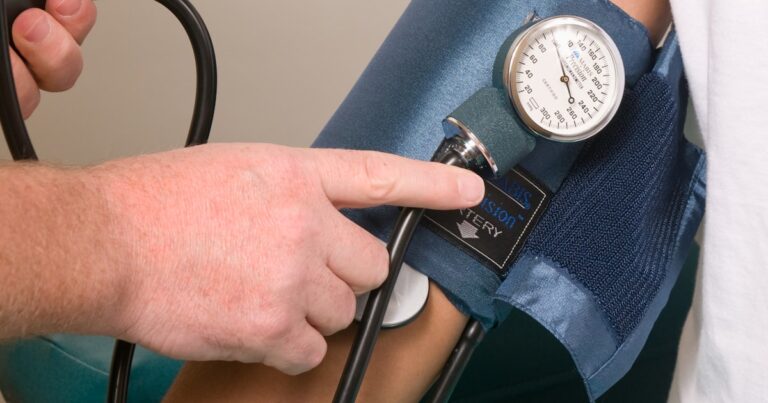
If your practice is weighing an in-office ABI machine, the decision comes down to a handful of practical checks: which measurement method the system uses, whether it records more than a single pressure ratio, who on your team can run it, how long a test takes, what the report looks like and where it goes, whether it supports medical necessity and documentation, and what training and support arrive with it. Get those seven right and the equipment pays its way in a real clinic day. Miss one and you own a device that sits in a closet.
Peripheral artery disease is common and under-recognized. The 2024 ACC/AHA peripheral artery disease guideline estimates that PAD affects 10 to 12 million adults over 40 in the United States, and it recommends the resting ankle-brachial index to help establish the diagnosis in patients whose history or examination findings suggest the disease. The ankle-brachial index is read as abnormal at 0.90 or below, borderline from 0.91 to 0.99, normal from 1.00 to 1.40, and noncompressible above 1.40, per that guideline. The test is inexpensive and non-invasive, which is exactly why so many independent practices want it on site rather than sending patients out.
Here is the point most buyer pages skip, and it is the one that protects your investment. A physiologic study reported under CPT 93923 is generally expected to include a recorded element, such as a plethysmographic waveform, not a bare pressure ratio typed into the chart. A machine that prints only an ABI number can leave your documentation thin. A system that also records volume plethysmography and toe-brachial measurements gives you the recorded study the code description contemplates. That single distinction should shape how you read every spec sheet in front of you, and it is why the checklist below starts with method and recording, not price.
What an in-office ABI machine actually does
An ankle-brachial index compares the systolic blood pressure at the ankle with the pressure at the arm. A ratio in the normal band suggests adequate lower-limb perfusion; a low ratio points toward arterial narrowing. If you want the clinical background first, our explainer on what an ABI test is and the companion piece on normal ankle-brachial index values walk through the numbers in plain terms.
An in-office ABI machine automates that comparison. Depending on the design, it inflates cuffs, records pressures and waveforms, calculates the ratios, and produces a report, all without sending the patient to a vascular lab. The appeal is obvious. The caution is that not every system records the same things, and the differences matter for both accuracy and documentation.
1. Which measurement method does the system use?
The first thing to settle about any in-office ABI machine is how it takes the measurement. Two broad approaches dominate. Continuous-wave Doppler, performed with a handheld probe and a cuff, is the long-standing reference method. Automated oscillometric cuff systems inflate and read the limbs for you. The consensus across the published literature is that automated cuffs are faster and need less operator skill, which is their real draw for a busy office. In one controlled comparison, Kollias and colleagues (Hypertension Research, 2011) measured an average automated reading time of 5.8 minutes versus 9.3 minutes for Doppler.
Speed is not the whole story, and an honest buyer should know the trade. The validation evidence for oscillometric ABI is genuinely mixed. Reported sensitivity has ranged from about 46 percent in one study of patients with coronary artery disease (Sinski, 2013) to roughly 89 percent in a hospital-based validation of a four-cuff oscillometric device (Ichihashi, 2020), and a 2021 narrative review by Danieluk and Chlabicz, summarizing an earlier meta-analysis, reported pooled oscillometric sensitivity of about 65 percent and specificity near 96 percent, and noted that the method tends to be less reliable at very low ABI values and in calcified vessels. For context, the 2024 ACC/AHA guideline puts the resting ABI itself at 69 to 79 percent sensitivity and 83 to 99 percent specificity in symptomatic patients, with sensitivity reduced in diabetes. The lesson is not that automated systems are poor. It is that the method alone does not settle accuracy, so what else the machine records becomes the deciding factor.
Two patient-specific factors deserve a direct question before you commit to any in-office ABI machine. Ask how the system handles noncompressible or heavily calcified vessels, which are common in patients with diabetes or advanced kidney disease, because that is exactly where an oscillometric reading can mislead. Ask too about cuff fit, since an accurate limb pressure depends on the right cuff for the patient in front of you. A device validated only on a young, healthy cohort may not behave the same way in the patients who actually sit in your chairs.
2. Does it capture more than a single ABI number?
This is the check that separates a durable in-office ABI machine from a regret. Ask what the system records beyond the ratio. A device that captures volume plethysmography waveforms gives you a recorded physiologic study, which is what a code like CPT 93923 describes, rather than a lone number. Ask whether it also performs the toe-brachial index, because the ACC/AHA guideline calls for toe pressures when the resting ABI reads above 1.40 and the ankle vessels are noncompressible, a common finding in patients with diabetes or renal disease. Our guide to CPT 93923 covers the coding side in detail.
The CMAT Advantage system, and the TM-Flow device it is built on, was designed around exactly this gap. It records the ankle-brachial index with cuffs on the arms and ankles, volume plethysmography, and the toe-brachial index, and it adds autonomic and sudomotor assessment in the same sitting. You are capturing a fuller physiologic picture, not a single data point, which is the difference between a report that supports your clinical reasoning and one that simply states a figure.
Waveforms are worth understanding here, not just collecting. A plethysmographic tracing shows the shape and volume of each pulse, which helps a reader separate a genuinely low ratio from an artifact and gives a referring vascular specialist something concrete to act on. A printout that carries the waveforms alongside the numbers is a stronger clinical document than a bare value, and it is the kind of output that makes a shared decision with a patient easier to explain.
3. Who on your team can run it, and how much training does it take?
The lighter the operator burden, the more consistently a test gets done. Automated systems were built so that trained clinical staff, not only the physician, can perform the measurement under supervision. In a primary-care registry of 632 digital ABI tests across 19 practices (Diage and colleagues, 2013), the study describes the test being performed by a medical assistant under the direct supervision of a physician, which speaks to how realistic in-office testing is when the device does the calculating. Scope of practice and supervision requirements vary by state and payer, so confirm yours; we cover the general picture in who can perform an ABI test. When you evaluate a machine, ask how long it takes to train a medical assistant to competency and what the vendor provides to get there.

4. How long does a test take, and does it fit the clinic day?
Time is the barrier practices name most often. In a survey of 886 clinicians (Mohler, Vascular Medicine, 2004), the leading obstacles to in-office ABI use were time constraints at 56 percent, reimbursement concerns at 45 percent, and staff availability at 45 percent. In that same program, weekly office ABI use rose from 12 percent to 43 percent after practices took part, which tells you the problem is practical, not clinical.
So ask for a realistic test time and map it to a real visit. A CMAT Advantage assessment runs about 7 to 10 minutes of testing, which a trained assistant can fold into a rooming or follow-up slot. If you are thinking through the broader rhythm of adding diagnostics to your schedule, our piece on in-office diagnostic testing workflow lays out the day-to-day mechanics.
5. What does the report look like, and where does it go?
An in-office ABI machine is only as useful as the record it leaves behind. Ask to see a sample report. You want clear ratios, the waveforms behind them, and a format a referring physician will actually read. Ask where the output lives. The CMAT Advantage system generates its report on the unit in your office and produces a PDF that the clinician reviews, signs, and prints or saves to the chart the same day. Be plain with any vendor about how a report reaches your record, and be skeptical of claims that results flow automatically into an EHR; in most real setups a person saves or uploads the file. A clean, signed, on-chart report the day of the visit is the realistic and defensible standard.
6. Will it support medical necessity and documentation?
This is where good intentions meet payer policy. Test patients who have documented symptoms or risk indications, record why the study was ordered, and let the results inform the plan of care. The distinction between testing a symptomatic patient and screening a well one matters: in 2018 the US Preventive Services Task Force concluded that the evidence was insufficient to recommend ABI screening in asymptomatic adults, and a 2023 literature scan found no new evidence to warrant an updated review. The ACC/AHA diagnostic recommendation, by contrast, applies when a patient already has signs or symptoms of the disease. Keeping your testing symptom-driven is both the clinically sound posture and the one that holds up on review.
On coding, lower-extremity physiologic studies such as CPT 93923 reflect a recorded study, which circles back to check number two: a machine that captures waveforms and plethysmography gives you something to document, while a number-only output may not. Coverage and documentation rules are set locally, so confirm current requirements with your Medicare Administrative Contractor before you build a program around any code. Our overview of in-office vascular testing puts the pieces together.
7. What support, training, and protection come with the purchase?
The in-office ABI machine itself is the easy part. Implementation is where programs succeed or stall. Ask what onboarding looks like, how staff are trained, who answers the phone when a test will not run, and what happens if the program does not work for your practice. With the CMAT Advantage package, training and implementation support are included with the purchase, and the system is backed by a buyback commitment: if a practice bills correctly and Medicare does not reimburse, HealthWright Technologies buys the system back. Ask any vendor to spell out its training, support, and return terms in plain language, so you know exactly what you are committing to.
You can compare the full package on the TM-Flow ANS and ABI testing system page, and read how the service wraps around the device on the CMAT Advantage system page. The device itself is built on FDA-cleared component devices from LD Technology, and it runs on a standard office Windows computer, so you are not rebuilding your IT to support it.
Questions to take into a demo
When a vendor puts an in-office ABI machine in front of you, a short list of pointed questions tells you more than any brochure. Walk in with these and watch how directly they are answered.
- Which measurement method does the system use, and what does it record beyond the ratio?
- Does it perform the toe-brachial index for patients with noncompressible ankle vessels?
- What recorded element, such as a plethysmographic waveform, appears on the finished report?
- How long does a full test take once a medical assistant is trained?
- How quickly can an assistant reach competency, and what training is included in the purchase?
- What does a completed report look like, and how does it reach the patient chart?
- Was the accuracy validated on a patient mix like mine, and independently of the manufacturer?
- What support, warranty, and return terms come with it, in plain language?

A few questions practices ask
Is an automated ABI as accurate as Doppler? The evidence is mixed, and automated readings tend to be less reliable at very low ABI values and in calcified vessels, which is why capturing waveforms and toe pressures alongside the ratio matters so much.
Do I need to test asymptomatic patients? No. Keep testing symptom-driven. The guideline recommendation to establish a diagnosis applies to patients who already have suggestive findings, not to well patients.
What if the ankle vessels are noncompressible? When the resting ABI reads above 1.40, the guideline calls for a toe-brachial index, so confirm the machine you buy can perform toe pressures. The in-office PAD testing guide covers this in the primary-care setting.
Bringing in-office ABI testing to your practice
Work the seven checks in order, insist on seeing a real sample report, and favor the in-office ABI machine that records a full physiologic study over one that prints a lone number. If you want to see how the CMAT Advantage system handles each of these in practice, you can book a 25-minute demo or reach us through the contact page. You can also call (678) 322-7146 and we will follow up. Tell us about your patient mix and your clinic day, and we will show you what the testing looks like start to finish.
This article is general information for licensed healthcare professionals and is not clinical, legal, or billing advice. CPT is a registered trademark of the American Medical Association; code references here are for general information only and do not guarantee coverage or payment. Confirm current coding, coverage, and documentation requirements with your Medicare Administrative Contractor.
Ready to see the CMAT Advantage in your practice?
Book a free 25-minute demo: see the full PAD + autonomic workup and how the three established CPT codes apply, with no obligation. Backed by our 60-day buyback guarantee.
Book a Free Demo →