
The annual wellness visit CPT code you bill depends on one thing: how long the patient has had Medicare Part B. Medicare pays for the visit under two HCPCS Level II codes, G0438 for a patient’s first annual wellness visit and G0439 for every one after that. Patients still inside their first 12 months of Part B coverage are not eligible for either code and receive the Initial Preventive Physical Exam, billed as G0402.
That timing rule is where most denials start. G0438 pays once in a patient’s lifetime, G0439 pays once per 12-month period, and neither can be billed within 12 months of a G0402. Get the sequence wrong and the claim comes back saying the patient has reached the benefit maximum for the period.
This guide walks through every annual wellness visit CPT code, the documentation each one requires, who is allowed to perform the visit, and the optional services you can add to the same claim. Every code and rule below is drawn from the current CMS Annual Wellness Visit and Initial Preventive Physical Exam coverage pages.
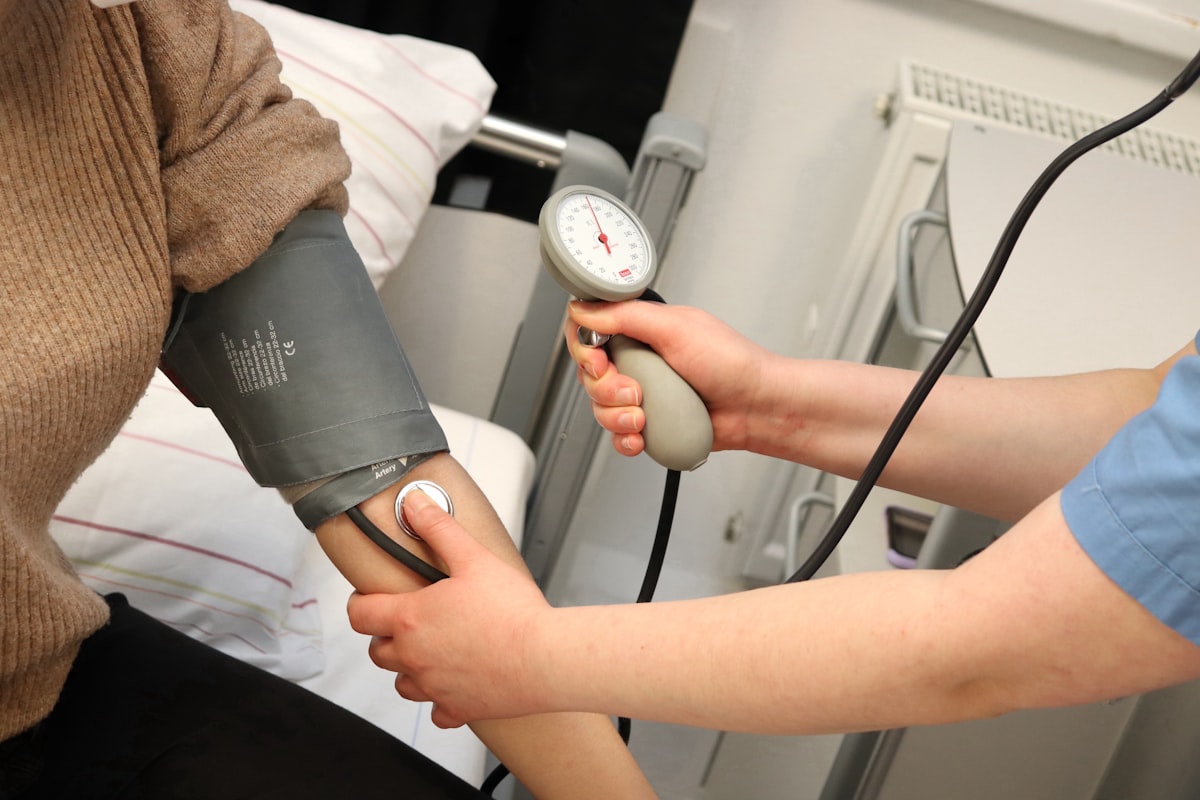
Which annual wellness visit CPT code should you bill?
Four codes cover this benefit. The annual wellness visit CPT code most practices need is either G0438 or G0439, but the full picture includes the Welcome to Medicare visit and a bundled code used by federally qualified health centers.
| Code | CMS descriptor | Frequency |
|---|---|---|
| G0402 | Initial preventive physical examination; face-to-face visit, services limited to new beneficiary during the first 12 months of Medicare enrollment | Once per lifetime, within the first 12 months of Part B |
| G0438 | Annual wellness visit; includes a personalized prevention plan of service (PPS), initial visit | Once per lifetime, after the first 12 months of Part B |
| G0439 | Annual wellness visit, includes a personalized prevention plan of service (PPS), subsequent visit | Once per 12-month period |
| G0468 | Federally qualified health center (FQHC) visit, IPPE or AWV | Per the FQHC per diem bundle |
One point of vocabulary is worth clearing up. These are HCPCS Level II codes maintained by CMS, not CPT codes maintained by the American Medical Association. Billers search for the annual wellness visit CPT code because both sets travel on the same claim, but G0438 will never appear in the CPT manual.
How do you choose between G0402, G0438, and G0439?
Work through the patient’s Part B history in order. The decision takes three questions.
- Has the patient had Part B for less than 12 months? Bill G0402. The Initial Preventive Physical Exam is payable once per lifetime and only inside that first year.
- Has the patient had Part B for more than 12 months and never had an annual wellness visit? Bill G0438.
- Has the patient already had an annual wellness visit, and has it been at least 12 months? Bill G0439.
Two guardrails sit on top of that sequence. CMS allows only one of G0438 or G0439 in any 12-month period, and it instructs practices not to bill either within 12 months of a G0402 for the same patient. Note that the clock runs on 12 months, not calendar years, so a visit in January followed by one the next January can still fall short by a few days. Checking Part B start date and prior wellness history before the appointment settles the annual wellness visit CPT code question before the patient is in the room.
Which elements must you document for the initial annual wellness visit CPT code?
G0438 is the heavier of the two codes. CMS lists the elements a first annual wellness visit must document, and the annual wellness visit CPT code you submit is only defensible if the record shows them.
- Health risk assessment. Patient-reported demographic data, a health status self-assessment, psychosocial risks, behavioral risks, activities of daily living and instrumental activities of daily living.
- Medical and family history. Hereditary conditions in parents, siblings and children, past medical and surgical history, and use of or exposure to medications and other substances.
- Current providers and suppliers list, including behavioral health providers.
- Measurements. Height, weight, body mass index or waist circumference, and blood pressure.
- Cognitive impairment detection by direct observation or reports from family, friends and caregivers.
- Depression risk review using a standardized tool recognized by a national professional organization.
- Functional ability and safety review, covering activities of daily living, fall risk, hearing, and home and community safety including driving.
- Written screening schedule, a checklist for the next 5 to 10 years built on USPSTF and ACIP recommendations.
- Risk factor and condition list with recommended primary, secondary or tertiary interventions.
- Personalized health advice and referrals to services such as fall prevention, nutrition, physical activity, tobacco cessation, social engagement, weight loss and cognition.
- Opioid prescription review for patients on a current opioid prescription, including risk factors, a pain and treatment plan evaluation, and information on non-opioid treatment options.
- Substance use disorder screening, with referral as appropriate.
Advance care planning and a physical activity and nutrition risk assessment are optional additions, covered further down.
How is the subsequent visit (G0439) different?
G0439 is an update rather than a fresh build. The structure carries over, but three requirements from the initial visit drop away.
| Element | G0438 (initial) | G0439 (subsequent) |
|---|---|---|
| Health risk assessment | Perform | Review and update |
| Medical and family history | Establish | Update |
| Providers and suppliers list | Establish | Update |
| Height and body mass index | Required | Not required |
| Weight and blood pressure | Required | Required |
| Cognitive impairment check | Required | Required |
| Depression risk review | Required | Not separately listed |
| Functional ability and safety review | Required | Not separately listed |
| Written screening schedule | Establish | Update |
| Risk factor list | Establish | Update |
| Personalized health advice and referrals | Required | Required |
| Opioid prescription review | Required | Required |
| Substance use disorder screening | Required | Required |
| Advance care planning | At patient’s discretion | At patient’s discretion |
The practical takeaway: a subsequent visit needs weight and blood pressure, not height and body mass index. Practices that run one templated intake for every wellness visit often collect more than G0439 requires, which is harmless, or reuse a first-visit template without updating the screening schedule, which is not. Once a patient has had that first visit, the annual wellness visit CPT code stays G0439 for the rest of their Medicare enrollment.
Who is allowed to perform and bill an annual wellness visit?
This is where the annual wellness visit CPT code is more flexible than most practices realize, and it is the main reason the benefit scales. Medicare Part B covers an annual wellness visit performed by:
- A physician, meaning a doctor of medicine or osteopathy.
- A qualified non-physician practitioner: a physician assistant, nurse practitioner or certified clinical nurse specialist.
- A medical professional, including a health educator, registered dietitian, nutrition professional or other licensed practitioner, or a team of medical professionals working under the direct supervision of a physician.
That third category does not exist for the Initial Preventive Physical Exam, which Medicare covers only when a physician or qualified non-physician practitioner performs it. A practice can therefore staff annual wellness visits with a supervised clinical team in a way it cannot staff G0402. The same supervision logic governs other in-office services, a topic covered in more depth in our guide to who can perform an ABI test.
Can you bill an office visit on the same day?
Yes, with conditions. When a patient raises a problem during the wellness visit that requires significant, separately identifiable and medically necessary work, CMS allows the additional evaluation and management service to be paid alongside the annual wellness visit CPT code. Report the E/M code from 99202 to 99205 or 99211 to 99215 with modifier 25.
Two cautions apply. The additional work must be genuinely separate from the prevention planning and must be documented that way, not carved out of the wellness visit itself. And while Medicare tells patients they pay nothing for the wellness visit when the provider accepts assignment, the added E/M service is subject to the usual deductible and coinsurance, so a patient who expected a free visit can receive an unexpected bill. Telling them in advance prevents most of those complaints.
Which optional services can be added to the same claim?
Two optional elements attach to the annual wellness visit CPT code claim and, unlike a same-day E/M, keep the patient’s cost sharing at zero when billed correctly.
| Code | What it covers | Cost sharing |
|---|---|---|
| 99497 | Advance care planning, first 30 minutes, face to face with the patient, family or surrogate | Deductible and coinsurance waived once per year when furnished the same day by the same provider and billed with modifier 33 on the AWV claim |
| 99498 | Advance care planning, each additional 30 minutes | Same waiver conditions as 99497 |
| G0136 | Administration of a standardized, evidence-based assessment of physical activity and nutrition, 5 to 15 minutes, no more often than every 6 months | Deductible and coinsurance waived when provided with the AWV |
G0136 is worth a second look, because CMS redefined it. The code originally described a social determinants of health risk assessment and now describes a physical activity and nutrition assessment. Any internal cheat sheet written before that change is now wrong.
Advance care planning has no annual limit on its own. The once-per-year restriction applies to the cost-sharing waiver, not to the service, so advance care planning delivered outside the wellness visit is payable but subject to the deductible and coinsurance.
Why do annual wellness visit claims get denied?
Most annual wellness visit CPT code rejections trace to a handful of avoidable causes rather than to clinical content.
- Frequency conflicts. A second G0438, an annual wellness visit less than 12 months after the last one, or a wellness visit within 12 months of G0402. CMS denies these with a benefit-maximum message.
- Wrong code for the patient’s Part B tenure. Billing G0438 for a patient still in the first 12 months of coverage, when G0402 is the payable service.
- Missing required elements. Most often the written screening schedule or the documented cognitive assessment, both of which are easy to skip and hard to defend after the fact.
- A same-day E/M without modifier 25, or with documentation that does not show separately identifiable work.
- Reused templates that carry a prior year’s risk list forward without updating it, which undercuts the personalized prevention plan the annual wellness visit CPT code is paid for.
Diagnosis coding is not usually the problem. CMS does not require a specific diagnosis code for the annual wellness visit and lets practices choose any code consistent with the patient’s exam.

How does the annual wellness visit connect to in-office diagnostic testing?
Carefully, and this distinction matters. The annual wellness visit is a prevention planning service. It does not include diagnostic testing, and no diagnostic test should ever be bundled into the annual wellness visit CPT code or performed simply because a wellness visit is on the schedule.
What the visit does produce is a documented risk factor list and a written screening schedule. When that record surfaces findings such as diabetes, tobacco use, hypertension, or exertional leg pain, the clinician may order diagnostic testing as a separate service, billed under its own codes and judged on its own medical necessity, coverage policy and documentation. That is a different standard from the one behind the annual wellness visit CPT code, and payers apply it independently.
Several of the required elements point in that direction on their own. The functional ability review covers fall risk, which overlaps with the autonomic and blood pressure findings discussed in our guide to orthostatic hypotension testing. The opioid review explicitly asks clinicians to provide information about non-opioid treatment options. And a risk factor list that includes diabetes or smoking is the same population addressed in PAD testing in primary care and the diabetic foot exam.
Where testing is clinically indicated and documented, doing it in the office keeps the workup in one place. HealthWright Technologies supplies FDA-cleared, non-invasive diagnostic systems for independent practices, including the CMAT Advantage system, with training, implementation and billing guidance. The coding for those studies is separate from the wellness visit and is covered in our ABI CPT code 93923 billing guide and autonomic function testing CPT code guide. Practices weighing whether the workflow pays for itself may also find our notes on ancillary revenue for medical practices and diagnostic testing for value-based care useful.
One more clarification worth holding onto: symptoms change the calculus. A patient reporting cramping leg pain on walking is no longer a screening question but a diagnostic one, as explained in our article on intermittent claudication.
Frequently asked questions about the annual wellness visit CPT code
What is the annual wellness visit CPT code for 2026?
There is no single annual wellness visit CPT code. Medicare pays for the visit under two HCPCS Level II codes: G0438 for a patient’s first annual wellness visit and G0439 for every subsequent one. A patient still inside the first 12 months of Part B coverage gets the Initial Preventive Physical Exam instead, reported with G0402. Federally qualified health centers report the visit with G0468.
Is G0438 a CPT code or a HCPCS code?
G0438 is a HCPCS Level II code, not a CPT code. CPT is the American Medical Association code set, while G codes are maintained by CMS. Most billers still search for the annual wellness visit CPT code, and in practice the two sets are submitted on the same claim form, so the distinction rarely changes workflow. It does matter when you look the code up, because G0438 will not appear in the CPT manual.
How often can you bill the annual wellness visit CPT code?
G0438 is payable once per lifetime, for the patient’s first annual wellness visit. G0439 is payable once per 12-month period after that. CMS also instructs practices not to bill G0438 or G0439 within 12 months of billing G0402 for the same patient. Claims that break these limits are denied with a message that the patient has reached the benefit maximum for the period.
Does the annual wellness visit include a physical exam?
No. The annual wellness visit is a prevention planning visit built around a health risk assessment, not a head-to-toe examination, and Medicare does not cover a routine yearly physical. The only measurements required are height, weight, body mass index and blood pressure at the first visit, and weight and blood pressure at subsequent visits. No diagnostic test is included in the annual wellness visit CPT code, so any testing is ordered and billed separately on its own medical necessity.
Can you bill an office visit on the same day as the annual wellness visit?
Yes, when the extra work is significant, separately identifiable and medically necessary. CMS instructs practices to report the additional evaluation and management code from 99202 to 99205 or 99211 to 99215 with modifier 25. Medicare tells patients they pay nothing for the wellness visit itself when the provider accepts assignment, but the separately billed evaluation and management service is subject to normal patient cost sharing.
Annual wellness visit CPT code: the short version
Three rules carry most of the weight. First, the annual wellness visit CPT code follows Part B tenure, so G0402 inside the first 12 months, G0438 for the first wellness visit after that, and G0439 every year thereafter. Second, the visit is prevention planning rather than an examination, and the written screening schedule and risk factor list are the parts auditors look for. Third, anything beyond the visit itself, whether a same-day E/M or a diagnostic study, has to stand on its own medical necessity and its own documentation.
Ready to add in-office diagnostic testing to your practice?
HealthWright Technologies helps independent physicians add in-office vascular and autonomic testing with full training, implementation, and billing guidance. To see how the workflow could fit your practice, contact our team at contact@healthwrighttechnologies.com or call (678) 322-7146. HealthWright Technologies, 60 Bear Creek Marina Road, Mansfield, GA 30055.
Disclaimer: This article is for general educational purposes for healthcare professionals and is not billing, coding, legal, or medical advice. CPT® is a registered trademark of the American Medical Association (AMA); all CPT codes and descriptions are © the AMA. HCPCS Level II codes are maintained by CMS. Code selection, coverage, and reimbursement change over time and vary by payer, so verify every code and policy against the current AMA CPT manual, the current HCPCS file, and the applicable payer guidelines before billing. Consult your healthcare provider before starting any new treatment. Clinical decisions remain the responsibility of the treating provider.
Disclaimer: This article is for informational purposes only and does not constitute medical advice. Always consult a qualified healthcare professional for diagnosis, treatment, and clinical decision-making.
Ready to see the CMAT Advantage in your practice?
Book a free 25-minute demo: see the full PAD + autonomic workup and how the three established CPT codes apply, with no obligation. Backed by our 60-day buyback guarantee.
Book a Free Demo →