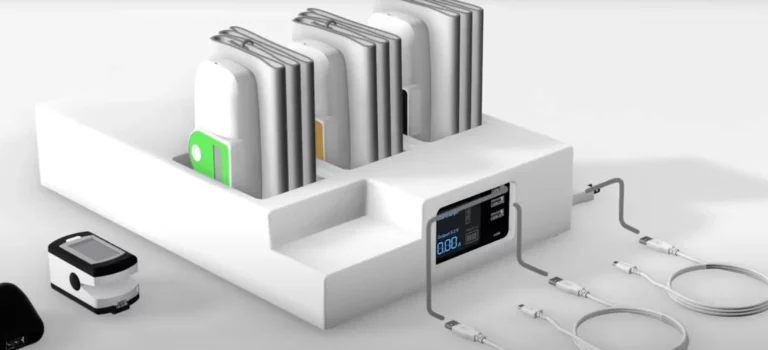
Peripheral arterial disease (PAD) affects an estimated 10 to 12 million Americans over age 40 per the 2024 ACC/AHA lower extremity PAD guideline, and a large share of cases go undiagnosed in primary care settings. For independent practices, the practical question is how to confirm the diagnosis in-office when a patient presents with symptoms or findings, instead of losing weeks to an outside referral. PAD testing with the CMAT Advantage system takes just 7 to 10 minutes per patient, is billable under established CPT codes when medically necessary, and provides objective data to support evaluation of vascular disease before it progresses to critical limb ischemia or contributes to cardiovascular events.

Why Is PAD Testing Critical for Independent Practices?
PAD prevalence ranges from 3-4% in the general population over age 45 to substantially higher rates in patients over 70. In high-risk populations — patients with diabetes, hypertension, smoking history, or known cardiovascular disease — prevalence reached 27.8% in a general-practice cross-sectional study of 5,679 high-risk adults aged 55 and older (Cacoub et al., Int J Clin Pract, 2009). Case-finding yield depends heavily on the population tested. In a UK primary care cross-sectional study of patients with cardiovascular risk factors but no known cardiovascular disease, PAD prevalence was 3%.
The consequences of missed PAD diagnosis are severe: patients with PAD face a 5-year mortality rate of about 30%, roughly three times that of comparable adults without it, primarily from heart attack and stroke. Objective ankle-brachial index (ABI) testing in patients with documented indications allows for timely intervention, risk factor management, and referral when appropriate.
What Does the CMAT Advantage PAD Testing Process Look Like?
The CMAT Advantage system streamlines PAD evaluation into a non-invasive, 7 to 10 minute protocol that fits seamlessly into existing clinical workflows. The system measures:
- Ankle-Brachial Index (ABI): Compares blood pressure in the ankle to the arm. Normal range is 1.00 to 1.40. Values of 0.90 or below indicate PAD, while values above 1.40 indicate noncompressible, calcified arteries, common in diabetic patients.
- Toe-Brachial Index (TBI): Particularly important for diabetic patients where calcified arteries can produce falsely elevated ABI readings. TBI provides accurate assessment even in calcified vessels.
- Volume Plethysmography: Records the arterial waveform, which stays readable when calcification makes the pressure values unreliable.
- Autonomic Nervous System Testing: Heart rate variability (HRV), Ewing tests, and sudomotor function assessment help evaluate autonomic neuropathy often associated with vascular disease.
Unlike handheld Doppler-only testing, the CMAT Advantage provides a comprehensive vascular and autonomic profile in a single patient visit, documented with standardized printed reports suitable for payer documentation and referral coordination.
How Is PAD Testing Billed in Independent Practices?
PAD testing with the CMAT Advantage system adds an objective, documented diagnostic service for independent practices. The primary billing codes include:
- CPT 93923: Complete bilateral noninvasive physiologic studies of upper or lower extremity arteries — billable when medically necessary; coverage varies by payer
- Combined testing: When ABI is performed alongside autonomic function testing, the components are separately billable when each is medically necessary; coverage varies by payer
The test requires minimal staff time during the automated data collection phase. Supervision is set per code in the CMS Physician Fee Schedule relative value files, so confirm the physician supervision indicator for each code you intend to bill before finalizing a staffing plan.
Which Patients May Warrant PAD Testing?
Current clinical guidelines support ABI testing in the following patient populations:
- All patients age 65 and older
- Patients age 50-64 with diabetes or smoking history
- Patients with known atherosclerotic disease in other vascular beds
- Patients with symptoms suggestive of PAD (claudication, non-healing wounds, leg pain at rest)
- Patients with multiple cardiovascular risk factors (hypertension, hyperlipidemia, obesity)
In a typical independent primary care practice, 15-25% of the patient panel may meet these criteria, representing a significant clinical need.
How Do Independent Practices Implement PAD Testing?
HealthWright Technologies provides a turnkey implementation program through the CMAT Advantage partnership. The process typically takes 2-4 weeks from commitment to first patient scan:
- Equipment installation and calibration — CMAT Advantage system setup with technical support
- Clinical staff training — Medical assistants learn to operate the system in 1-2 training sessions
- Billing and coding setup — Credentialing support and payer documentation templates for CPT 93923
- Patient identification workflow — clinical-indication criteria your front desk applies in your own scheduling or chart system to identify patients with documented symptoms or risk indications
- On-system reporting — Automated report generation on the CMAT system for clinical documentation and referral coordination
The system is designed for independent practices that may not have a dedicated vascular lab — it brings diagnostic capability that previously required referral to a hospital or specialty center directly into the primary care setting.
How Does CMAT Advantage PAD Testing Compare to Other Testing Options?
Independent practices generally have three options for PAD testing: handheld Doppler ABI, referral to a hospital vascular lab, or in-office testing with the CMAT Advantage system. The table below compares how each approach fits a primary care workflow so you can decide which best supports timely vascular evaluation in your patient panel.
| Factor | Handheld Doppler ABI | Hospital Vascular Lab Referral | CMAT Advantage (In-Office) |
|---|---|---|---|
| Where it happens | In your practice | Requires outbound referral | In your practice |
| Parameters measured | ABI ratio only | Comprehensive vascular studies | ABI, TBI, plethysmography, HRV, and autonomic function |
| Time per patient | Operator-dependent | Separate appointment plus patient travel | 7 to 10 minutes, automated data collection |
| Reproducibility | Operator-dependent | High | Automated and reproducible |
| Documentation | Manual notes | Returned by the lab | Automated CMAT report printed in office |
| Diabetic patients with calcified vessels | ABI may read falsely elevated | TBI available | TBI included to assess calcified vessels |
Frequently Asked Questions About PAD Testing in Independent Practices
How long does a CMAT Advantage PAD test take?
A complete CMAT Advantage test takes 7 to 10 minutes of patient contact time. The automated system collects data while the patient is seated comfortably, requiring minimal staff involvement after initial setup. The report is generated on the CMAT system in the office and is available immediately.
Is PAD testing covered by Medicare?
ABI testing (CPT 93923) is covered by Medicare when it is medically necessary and documented; routine testing of asymptomatic, low-risk patients is generally not covered. Combined with autonomic function testing, the components are separately billable when each is medically necessary; coverage varies by payer.
Can medical assistants perform the PAD test?
Yes. The CMAT Advantage system is designed for medical assistant operation under physician supervision. Staff training typically takes 1-2 sessions, and the automated data collection process requires no specialized vascular training.
What is the difference between ABI-only testing and full CMAT Advantage testing?
An ABI-only test measures blood pressure ratios in the extremities. The CMAT Advantage system adds toe-brachial index (critical for diabetic patients), volume plethysmography, heart rate variability, and autonomic function assessment — providing a comprehensive vascular and neurological profile in a single visit.
How does CMAT Advantage compare to handheld Doppler testing?
Handheld Doppler provides a single data point (ABI ratio) with operator-dependent accuracy. CMAT Advantage delivers automated, reproducible multi-parameter assessment including ABI, TBI, SBP, plethysmography, and autonomic testing — with standardized printed reports that support both billing documentation and specialist referral coordination.
Ready to add PAD testing to your practice? Contact HealthWright Technologies to learn more about the CMAT Advantage system or request a free demo.
HealthWright Technologies
60 Bear Creek Marina Road, Mansfield, GA 30055
Phone: (678) 322-7146
Email: contact@healthwrighttechnologies.com
Medical Disclaimer: This article is for informational purposes only and does not constitute medical or billing advice. CPT codes are provided for reference only and do not guarantee reimbursement. Verify code applicability and coverage with the relevant payer and your billing department before submitting claims. CPT is a registered trademark of the American Medical Association. Individual practice results may vary.
Related Articles
- PAD testing with the CMAT Advantage system
- What is an ABI test?
- Introduction to the TM-Flow System
- How three diagnostic CPT codes map to one CMAT visit
Ready to see the CMAT Advantage in your practice?
Book a free 25-minute demo: see the full PAD + autonomic workup and how the three established CPT codes apply, with no obligation. Backed by our 60-day buyback guarantee.
Book a Free Demo →